.svg)
.svg)

AI Methods Shorten Development Cycles by 120x | Felsaris
With AI methods from Felsaris, shorten development cycles by up to 120x, reduce costs, and make decisions with >99% accuracy using surrogate models.
How AI Methods Shorten Development Cycles at Felsaris
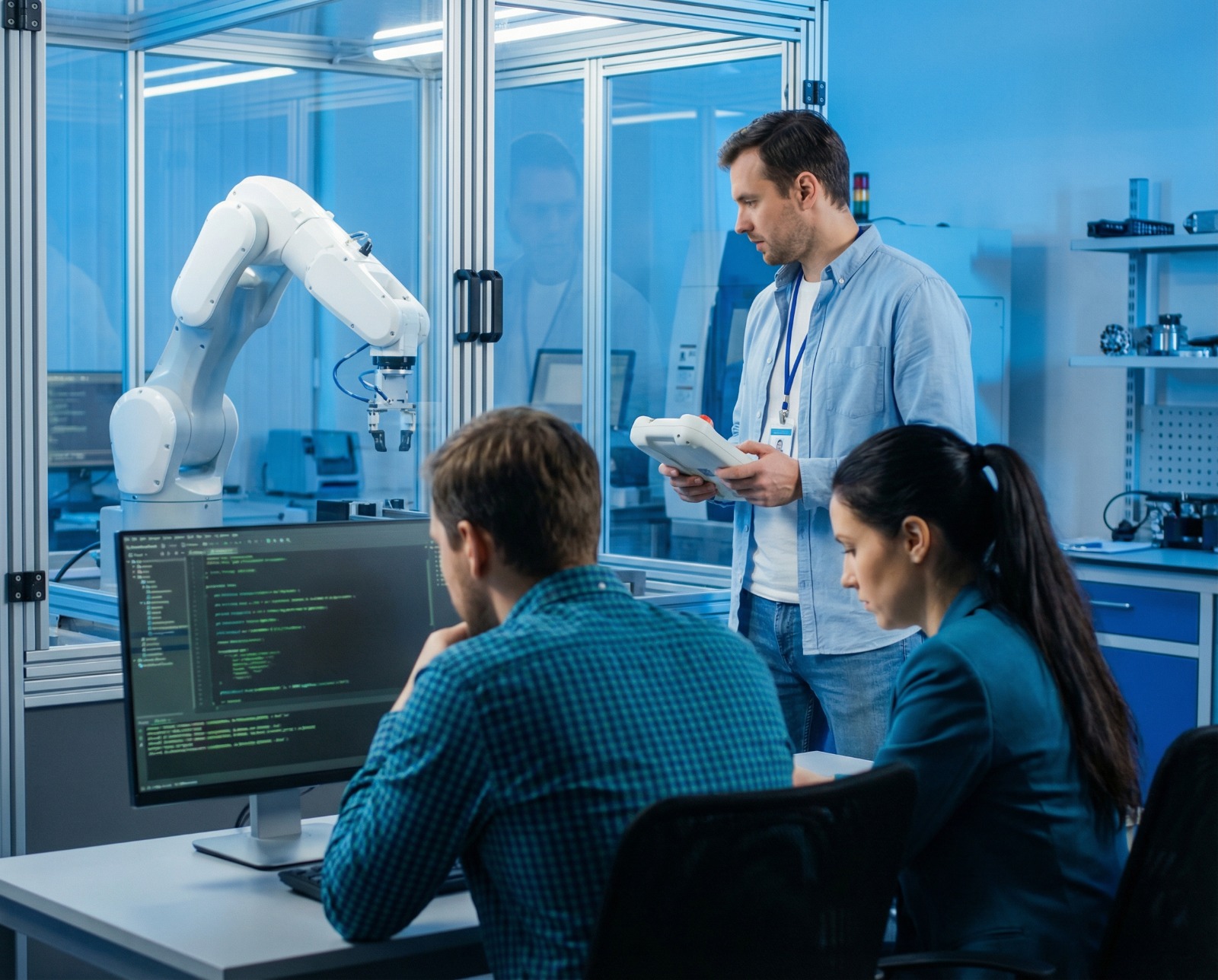
Artificial intelligence is revolutionizing modern product development and enables engineering firms like Felsaris to drastically shorten development cycles. While traditional engineering approaches often rely on time-consuming trial-and-error methods, Felsaris uses AI-powered techniques for fast, data-driven optimization of technical products. The use of machine learning, surrogate models, and intelligent algorithms reduces the time to a functional prototype by up to 120 times while significantly lowering development costs.
AI-Based Surrogate Models Replace Cost-Intensive Iterations
The traditional product development process is often based on the “One-Factor-at-a-Time” principle, where individual parameters are varied and tested sequentially. This method is not only time-consuming but also inefficient when exploring complex design spaces. Felsaris breaks this approach by strategically using AI-based surrogate models.
These intelligent models are trained using data from high-precision CFD simulations and can subsequently predict the behavior of technical systems with an accuracy of over 99 percent. A practical example from Felsaris demonstrates the impressive efficiency: instead of performing 500 time-intensive CFD simulations, intelligent design-of-experiments methods require only 50 simulations to create a highly accurate surrogate model.
The result: engineers receive design evaluations in just one minute instead of the originally required two hours per variant. This enables 120 times faster design exploration and makes extensive parameter studies practically feasible.
Machine Learning Automatically Optimizes Development Decisions
At Felsaris, machine learning goes beyond pure surrogate models. Reinforcement learning algorithms independently explore the design space and automatically identify optimal solutions. This method is particularly valuable in the development of flow-guiding systems such as valves, fuel cells, or combustion engines, where numerous parameters must be optimized simultaneously.
Felsaris’ AI algorithms analyze large volumes of data from simulations and experiments, detect complex patterns and interactions between design parameters that are often not obvious to human engineers. As a result, not only local but global optima are identified, leading to significantly improved product performance.
A concrete example demonstrates the power of this approach: during the optimization of internal flow geometries, Felsaris automatically identified the best design using AI-supported algorithms without requiring manual intervention or engineering assumptions.
Development of AI-Supported Product Engineering at Felsaris
The development of AI integration at Felsaris follows a structured approach built on years of experience in computer-aided engineering. The engineering firm combines established machine learning frameworks with highly specialized engineering tools such as CAD, CFD, and FEM software.
The development process begins with the parameterization of the system to be optimized. All relevant geometric and operational parameters are translated into a mathematical model that serves as the foundation for AI algorithms. Intelligent design of experiments then identifies and simulates the most relevant design points.
These simulation datasets form the training basis for neural networks and other machine learning algorithms. Random Forest algorithms and Bayesian optimization have proven particularly effective at Felsaris, as they can generate reliable predictions even with limited datasets.
The continuous advancement of AI methods takes place through project work. Each new development project provides additional training data and expands the knowledge of the algorithms. As a result, predictions become increasingly precise and development times continue to decrease.
AI Software Development for Tailored Engineering Solutions
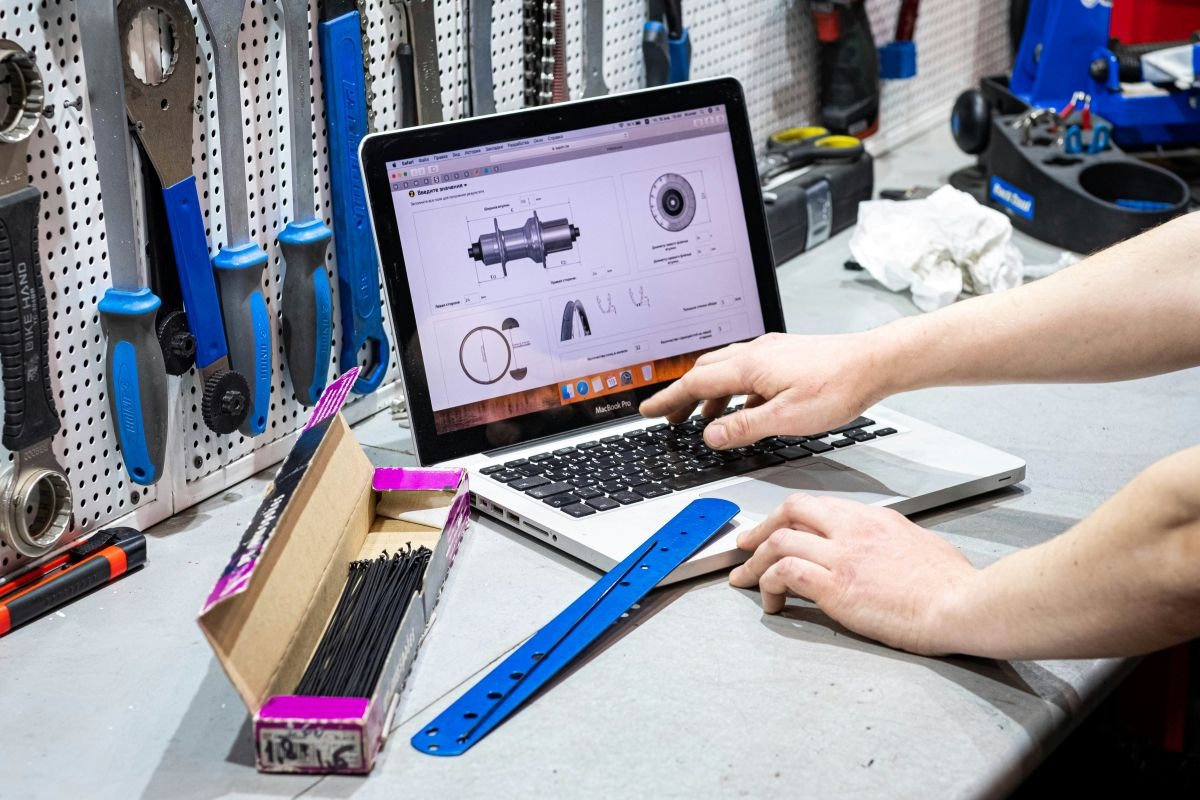
AI software development at Felsaris focuses on the seamless integration of machine learning algorithms into existing engineering workflows. Instead of relying on standard solutions, the company develops customized AI tools specifically tailored to the requirements of technical product development.
A central component is the automated coupling of CAD software with simulation environments. Parametric 3D models are automatically generated, simulated, and evaluated without manual effort. The AI software controls the entire process—from geometry creation to meshing and evaluation of simulation results.
Particularly innovative is the development of predictive models capable of delivering reliable statements about final product performance at early development stages. These models are trained using GPU-accelerated algorithms and can be executed in parallel on high-performance clusters.
The software architecture is modular and can be flexibly adapted to different application areas. From flow optimization and combustion analysis to structural mechanical design, the same AI foundations can be applied.
Practical Application: Hydrogen Engine Development with AI
An impressive example of the practical benefits of AI-supported development is hydrogen engine development at Felsaris. The complex conversion of conventional combustion engines to hydrogen operation requires the simultaneous optimization of numerous parameters: injection system, ignition timing, charging system, combustion chamber geometry, and valve control.
Traditional development methods would divide this task into sequential individual steps and optimize each component in isolation. Felsaris’ AI methods instead consider the overall system and optimize all parameters simultaneously while accounting for their interactions.
The result: a 6-cylinder engine was successfully converted from gasoline to hydrogen operation within just one year and achieved 100 percent of its original performance with zero CO₂ emissions. This development timeline would not have been achievable using conventional methods.
The AI algorithms identified configurations that human engineers might have overlooked and led to an optimized overall design that is both powerful and emission-free.
Integration of AI into Existing Development Processes
Felsaris does not view AI as a replacement for proven engineering methods, but as an intelligent extension of existing workflows. Integration is implemented step by step and aligned with specific customer needs.
Smaller companies benefit from ready-made AI solutions that can be used without significant upfront investment. Felsaris’ on-demand services bring AI-supported development methods to projects with limited budgets.
Larger development departments receive customized AI tools that are integrated into their existing software environments. Internal engineers are trained to independently use and further develop AI methods.
Implementation often begins with pilot projects that demonstrate the effectiveness of AI methods. After successful validation, the algorithms are expanded to additional application areas.
Cost Reduction Through Intelligent Optimization
The use of AI methods leads to measurable cost advantages in product development. Physical prototypes are expensive and time-consuming, particularly for complex systems such as combustion engines or flow-guiding components.
Predictive AI models drastically reduce the number of physical prototypes required. Instead, virtual experiments are conducted that deliver results within minutes, results that previously required weeks or months.
Automated optimization also reduces the need for highly specialized engineers. Routine tasks such as parameter studies or design variations are handled by AI algorithms, allowing engineers to focus on creative and strategic activities.
Small and medium-sized enterprises particularly benefit from this approach, as they gain access to cutting-edge development methods without building internal AI expertise.
Quality Improvement Through Data-Driven Decisions
AI-supported development leads not only to faster but also better results. Algorithms can explore design spaces more comprehensively than manual methods and identify solutions that simultaneously meet all optimization goals.
Modern AI models achieve prediction accuracies of over 99 percent, providing a reliable basis for development decisions. With each project, continuous algorithm improvement further increases this accuracy.
Objective, data-driven evaluations replace subjective assessments and reduce the risk of costly misjudgments. This is particularly important in the development of safety-critical components or high-volume products.
Conclusion: AI as a Driver of Innovation
The integration of AI methods into product development enables companies to develop faster, more cost-effectively, and with higher quality. Through real project experience, Felsaris demonstrates how machine learning, surrogate models, and intelligent optimization can revolutionize development cycles.
Especially for start-ups and SMEs, these methods open new opportunities: complex development projects that were previously reserved for large corporations become feasible for smaller companies through AI support.
Would you like to leverage the power of AI-supported product development for your next project? Contact Felsaris for a non-binding consultation and learn how artificial intelligence can shorten your development cycles.
Frequently Asked Questions About AI-Supported Development
What advantages do AI surrogate models offer compared to conventional simulations?
AI surrogate models enable up to 120 times faster design evaluation with an accuracy of over 99 percent. They replace time-intensive CFD simulations and enable extensive parameter studies that would be practically infeasible with conventional methods.
How are AI algorithms trained at Felsaris?
Training is conducted using data from high-precision simulations and real experiments. Intelligent design of experiments minimizes the amount of required training data while achieving high model accuracy.
Can existing CAD and CFD workflows be integrated into AI systems?
Yes, Felsaris develops customized interfaces between established engineering software and AI algorithms. Integration is implemented step by step, enabling seamless use of existing tools with extended AI capabilities.
What cost savings are realistic with AI-supported development?
By reducing physical prototypes and accelerating development cycles, cost savings of 30–50 percent can be achieved. The exact savings depend on project complexity and the degree of AI integration.
Is AI-supported development accessible for smaller companies?
Absolutely. Felsaris offers flexible on-demand services suitable even for projects with limited budgets. Smaller companies can benefit from advanced AI methods without building internal expertise.