.svg)
.svg)

CAD Drawings: Mastering Sustainable Prototype Manufacturing
CAD drawings from a new perspective: Learn how DfM, simulation, and material selection make prototypes faster, more sustainable, and manufacturing-appropriate.

CAD Drawings for Sustainable Prototype Manufacturing
A precise CAD drawing forms the foundation of every successful prototype manufacturing and efficiently sustainable product development. As a computer-aided technical design basis, it enables engineers and developers to transform innovative ideas into production-ready designs while simultaneously conserving resources and shortening development times. At Felsaris, we understand CAD drawings as a strategic tool for sustainable innovation.
Modern product development faces the challenge of becoming ever faster while simultaneously being more environmentally conscious. This is where the importance of professional CAD drawings comes into play: They reduce the number of physical prototypes, minimize material and energy waste, and create the basis for precise manufacturing planning.
Fundamentals of CAD Drawing in Modern Product Development
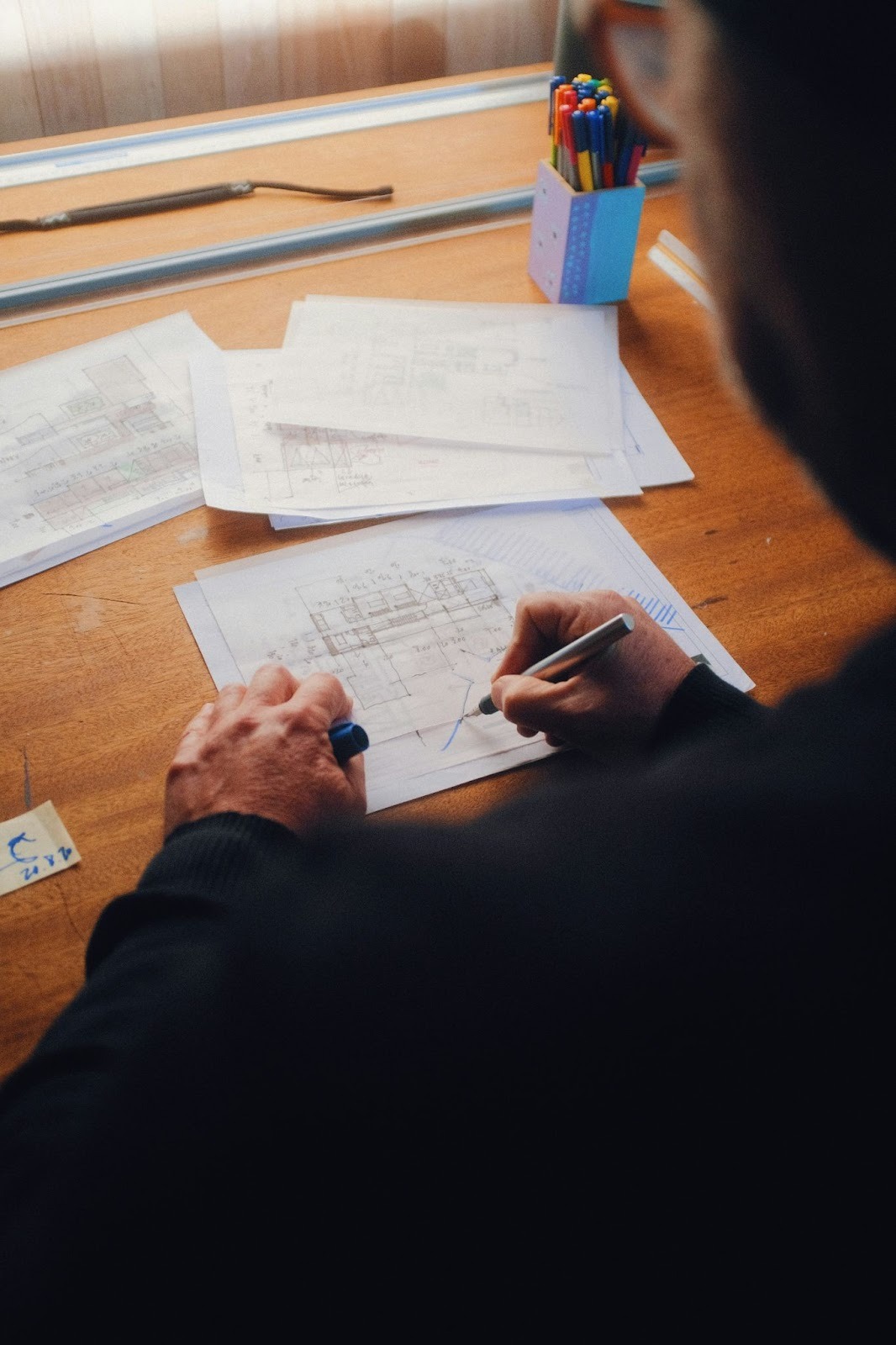
A CAD drawing is far more than a digital sketch. It is a precise, computer-aided technical document that contains all relevant information for manufacturing a product or component. From dimensions and tolerances to material specifications and surface finish, the CAD drawing conveys all crucial design data.
In sustainable prototype manufacturing, the CAD drawing functions as a central information source between design, engineering, and manufacturing. It makes it possible to identify and eliminate potential weaknesses already in the virtual phase before costly material is consumed.
Modern CAD software supports parametric modeling, where changes to one element automatically update all dependent components. This approach not only reduces the probability of errors but also significantly accelerates iteration cycles.
The integration of simulation tools directly into the CAD creation process enables developers to validate design decisions already during the drawing creation. This results in optimized designs that are both functional and well-thought-out from a manufacturing perspective.
Technical Drawing CAD: Precision Meets Sustainability
The technical drawing CAD combines traditional design rules with modern digital possibilities. It follows established norms and standards while fully utilizing the precision capabilities of computer-aided design.
A decisive advantage of technical CAD drawings lies in their reproducibility and versionability. Development teams can access earlier design stages at any time, trace changes, and follow parallel development branches without having to produce physical prototypes.
The standardization of technical CAD drawings enables different manufacturing partners to produce identical components regardless of their geographic location. This reduces transport routes and supports local manufacturing structures – an important contribution to sustainable product development.
Through the integration of material databases in CAD systems, developers can already evaluate the environmental impacts of different material choices during design. This creates sustainability-optimized designs from the start.
The use of libraries with standard components in technical CAD drawings promotes the reuse of proven components and reduces the effort for new developments. This saves not only time and costs but also resources.
2D CAD Drawings: Efficiency in Manufacturing Communication
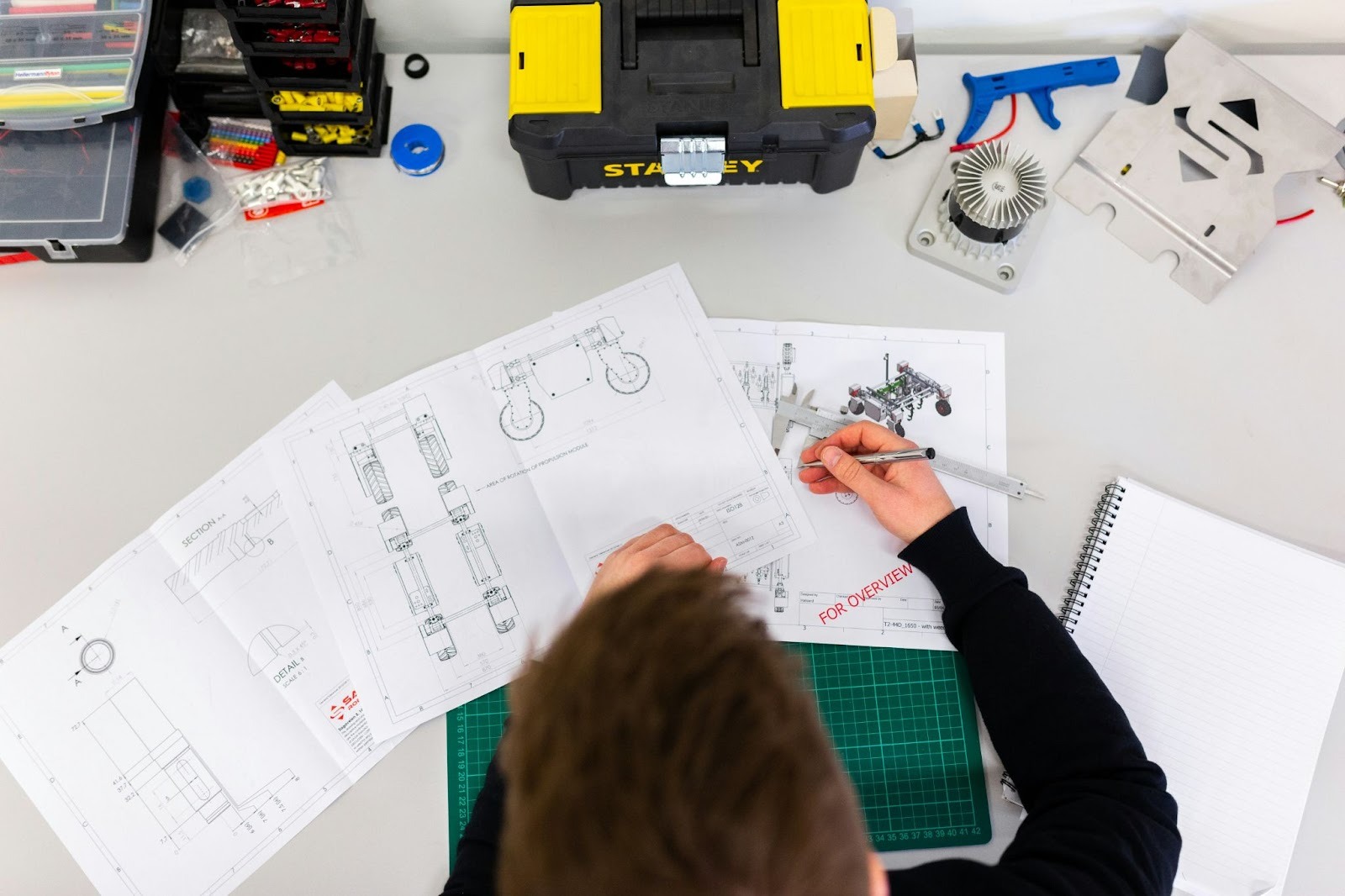
2D CAD drawings still form the backbone of technical communication between development and manufacturing. They deliver all manufacturing-relevant information in a standardized, universally understandable form that can be interpreted independently of specific software versions.
The creation of 2D CAD drawings requires special expertise, as complex three-dimensional geometries must be transferred into understandable two-dimensional representations. All information relevant for manufacturing must be represented completely and unambiguously.
In sustainable prototype manufacturing, precise 2D CAD drawings enable exact cost calculation even before the first material order. Manufacturing facilities can select optimal manufacturing processes based on the drawings and minimize scrap.
Quality assurance benefits significantly from detailed 2D CAD drawings. Inspection plans can be systematically derived from the design documents, and measurement results can be directly compared with target values from the drawing.
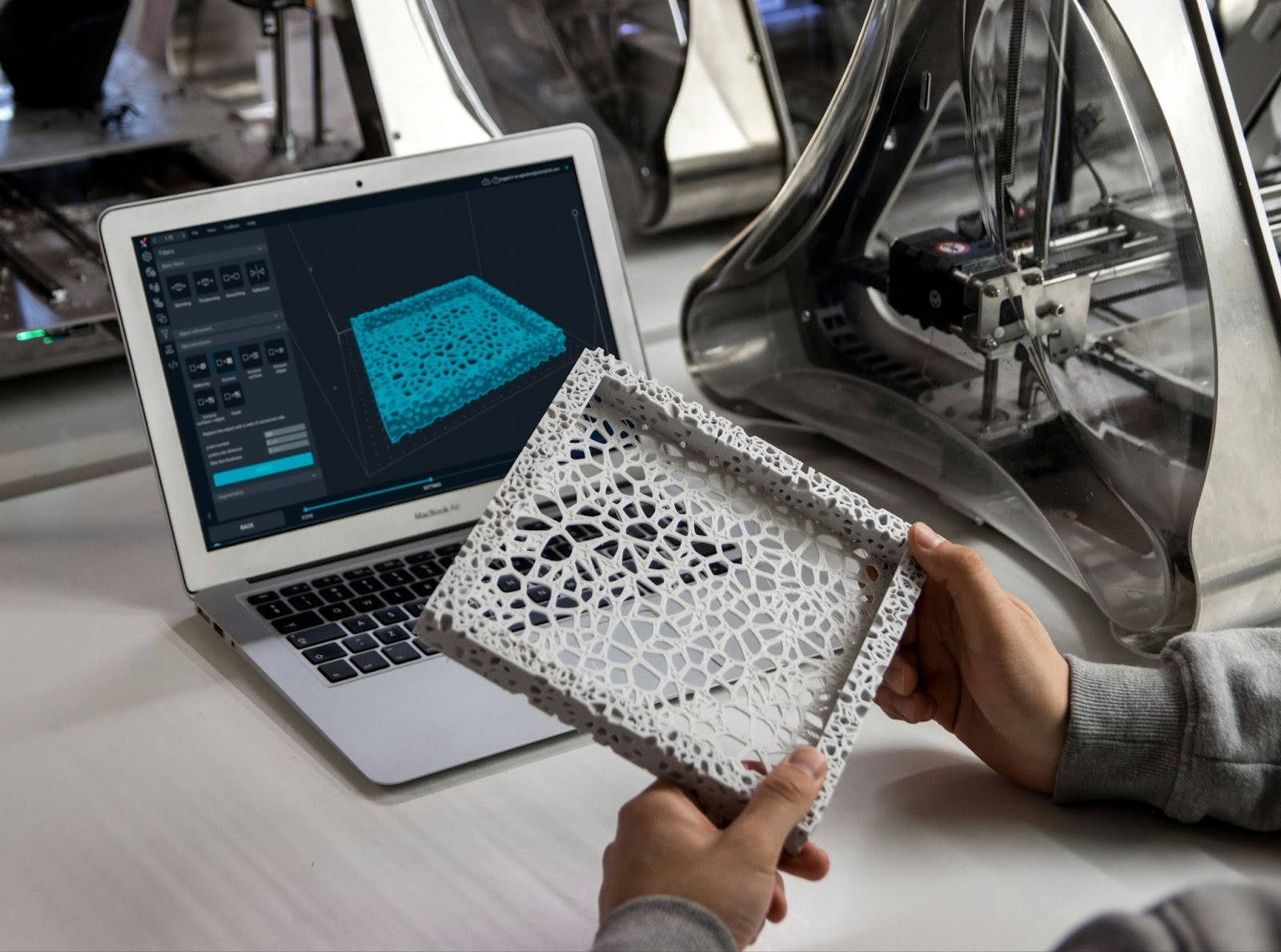
Especially in additive manufacturing, such as 3D printing, 2D CAD drawings serve as an important supplement to 3D models. They define critical tolerances and surface qualities that require special attention in layer-by-layer manufacturing.
Sustainable Prototype Manufacturing Through Intelligent CAD Design
The connection between CAD drawings and sustainable prototype manufacturing begins already in the design phase. Manufacturing-appropriate design reduces material waste, shortens production times, and minimizes energy consumption during manufacturing.
Design for Manufacturing (DfM) principles, directly implemented in CAD drawings, make it possible to manufacture prototypes with minimal post-processing steps. This reduces not only costs but also the ecological footprint of the development process.
The integration of lightweight construction strategies in CAD designs leads to material-optimized prototypes that consume fewer raw materials with the same functionality. Topology optimization and generative design approaches support this process.
Modular design approaches documented in CAD drawings enable the reuse of components in different prototype variants. This significantly reduces the total number of individual parts to be manufactured.
Consideration of the entire product lifecycle already in CAD design makes it possible to develop prototypes that can later be more easily disassembled and recycled. These circular design approaches are gaining increasing importance.
CAD-Assisted Material Optimization and Waste Avoidance
Modern CAD systems offer extensive analysis capabilities that already reveal optimization potentials during design. FEM (Finite Element Method) directly in the CAD system identifies over-dimensioned areas and enables targeted material reduction. Through integrable CFD tools, such as FloEFD, even flow optimizations can be undertaken in a well-founded manner already during CAD design processes.
The automatic generation of bills of materials from CAD drawings helps to plan material requirements exactly. Scrap can be minimized by optimally arranging different components on standard material formats.
Parametric CAD models make it possible to quickly evaluate different material thicknesses and properties without having to recreate the entire design. This allows finding the optimal ratio between functionality and material consumption.
The integration of sustainability databases in CAD systems supports developers in selecting environmentally friendly materials and manufacturing processes. Already in the design phase, the environmental impacts of different design decisions become transparent.
Through the use of cloud-based CAD platforms, teams can work on designs across locations without having to send physical prototypes. This reduces transport effort and accelerates development processes.
Digital Validation Before Physical Manufacturing
The combination of CAD drawings with CFD analyses (Computational Fluid Dynamics) uncovers flow engineering optimization potentials, while FEM simulations identify mechanical weaknesses.
Virtual Reality (VR) and Augmented Reality (AR) technologies expand the possibilities of digital prototype validation. Complex assemblies can be experienced three-dimensionally and checked for assembly capability without needing physical parts.
Collision checks and interference analyses in CAD systems identify design errors early and prevent costly rework on already manufactured prototype parts. This digital quality assurance is an important building block of sustainable development processes.
The automatic generation of technical documentation from CAD models reduces manual effort and minimizes transmission errors. Assembly instructions, exploded views, and service documentation are created directly from the design data.
Through linking CAD systems with Enterprise Resource Planning (ERP) software, development and manufacturing processes can be seamlessly integrated. Material orders, capacity planning, and cost controlling are based on current design data.
Integration into Sustainable Manufacturing Strategies
CAD drawings form the basis for sustainable manufacturing strategies such as additive manufacturing through an indispensable quality check using the drawing. 3D printing processes make it possible to manufacture complex geometries with minimal material waste while simultaneously realizing function integration.
The optimization of CAD designs for local manufacturing processes reduces transport routes and strengthens regional economic cycles. Distributed manufacturing, where components are manufactured close to the point of use, only becomes possible through standardized CAD data.
Hybrid manufacturing approaches that combine additive and subtractive processes require precise CAD designs that optimally utilize both technologies. This combination makes it possible to unite the advantages of different manufacturing methods.
The linking of CAD systems with automated manufacturing facilities enables a continuous digital process chain from design to quality control. Industry 4.0 concepts thus become realizable in prototype manufacturing.
Predictive maintenance strategies based on CAD data extend the service life of manufacturing facilities and reduce unplanned failures. The component properties documented in CAD drawings flow into predictive maintenance concepts.
Conclusion
CAD drawings are far more than technical documentation – they are the key to sustainable and efficient prototype manufacturing. Through intelligent use of modern CAD technologies, development times can be shortened, material consumption reduced, and quality increased. At Felsaris, we rely on a holistic approach that optimally combines CAD design, simulation, and sustainable manufacturing strategies.
The future of product development lies in the intelligent linking of digital and physical worlds. Those who invest in professional CAD competence today create the foundation for successful and sustainable innovations of tomorrow.
Start your sustainable development project with professional flow-optimized CAD designs. Contact Felsaris for individual consultation and discover how precise design and sustainable manufacturing can advance your innovation. Also feel free to check out our price-transparent on-demand solutions!
Frequently Asked Questions
What Makes a CAD Drawing Manufacturing-Appropriate?
A manufacturing-appropriate CAD drawing already considers the requirements of the chosen manufacturing process in the design phase. This includes appropriate tolerances, accessible geometries for tools, optimal material utilization, and avoidance of unnecessary post-processing steps. Design for Manufacturing (DfM) principles, as well as welding-appropriate design, flow directly into CAD design.
How Do CAD Drawings Reduce Material Consumption in Prototype Manufacturing?
CAD drawings enable precise material calculations and scrap optimization even before manufacturing. Through simulations and optimization algorithms, components can be designed to fulfill their function with minimal material use. Topology optimization and lightweight construction strategies are directly implemented in CAD design.
Can Existing 2D Drawings Be Converted into 3D CAD Models?
Yes, through reverse engineering and 3D scanning, existing 2D drawings or physical components can be transferred into precise 3D CAD models. This process makes it possible to digitize existing designs and optimize them for modern manufacturing processes without losing proven functionality.
What Role Do CAD Drawings Play in Additive Manufacturing?
In additive manufacturing, CAD drawings form the basis for optimized component design. They define not only the geometry but also specific requirements such as support structures, layer orientation, and post-processing needs. Modern CAD software already considers the special possibilities and limitations of 3D printing during design.
How Do CAD Systems Support the Sustainability Assessment of Prototypes?
Modern CAD systems integrate material databases with sustainability indicators, Life Cycle Assessment (LCA) tools, and energy calculation modules. This allows developers to evaluate and optimize the environmental impacts of different design decisions already during design. Automatic reports show improvement potentials regarding material consumption, energy demand, and recyclability.