.svg)
.svg)

Aerodynamics: What Is It? Fundamentals, Lift, Drag
Aerodynamics explained clearly: Learn fundamentals, forces, and flows from lift to drag, CFD, wind tunnel testing, and applications in aviation.
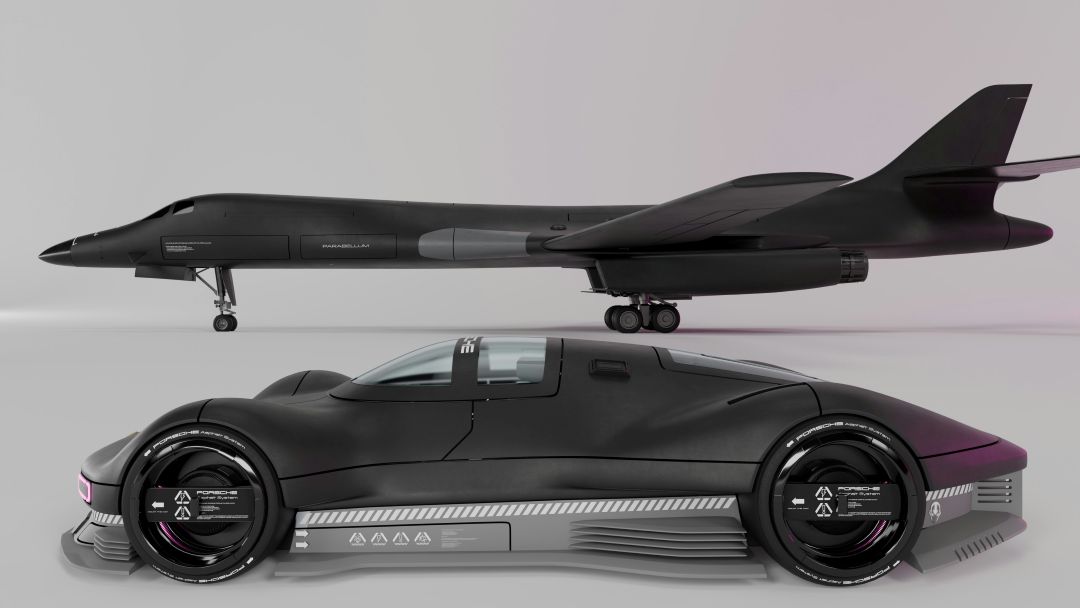
What Is Aerodynamics? Fundamentals and Importance Explained Simply
Aerodynamics is the scientific discipline that deals with the motion of air and other gaseous fluids and their interaction with solid bodies. This field examines fundamental flow phenomena and the resulting forces such as lift, drag, and side force, which are crucial for countless technical applications.
Understanding the Basic Principles of Aerodynamics
Bernoulli Principle and Pressure Distribution
The Bernoulli principle is one of the fundamental concepts of aerodynamics. It states that as flow velocity increases, static pressure decreases. In practical terms, this means that if air flows faster over the upper surface of a wing than under its lower surface, a pressure difference is created. This pressure difference generates an upward force called lift, which enables aircraft to fly.
Newton's Laws in Flow
In addition to the Bernoulli principle, Newton's third law plays a central role. When a wing deflects airflow downward, an equal but opposite force acts upward in reaction. This combination of pressure differences and changes in momentum fully explains how lift is generated.
Laminar and Turbulent Flows
Airflows can be laminar or turbulent. Laminar flows are orderly and layered, whereas turbulent flows are characterized by chaotic eddies. The Reynolds number, a dimensionless parameter, helps engineers predict when a flow transitions from laminar to turbulent.
Drag and Its Different Components
Skin Friction Drag
Skin friction drag arises from the viscosity of air along the surface of a body. Modern surface treatments and optimized geometries can significantly reduce this type of drag.
Pressure Drag
Pressure drag results from pressure differences between the front and rear of an object. Streamlined design minimizes this effect through smooth transitions and by avoiding abrupt changes in geometry.
Induced Drag
Induced drag occurs as an unavoidable consequence of generating lift. Wingtip vortices form at the ends of wings and create additional drag. Winglets and optimized wing shapes can reduce this effect.

Aerodynamic Engineering: Modern Development Methods
Aerodynamic engineering combines traditional aerodynamic principles with state of the art development tools. Computational fluid dynamics enables engineers to simulate complex flow conditions before physical prototypes are built.
Computational Fluid Dynamics (CFD)
CFD simulations solve the Navier Stokes equations numerically and visualize flow fields with high detail. This method significantly reduces development time and allows the investigation of scenarios that are difficult to reproduce in wind tunnels.
Wind Tunnel Testing and Validation
Despite advanced simulation capabilities, wind tunnel testing remains essential for validating calculations. Modern wind tunnel facilities can precisely reproduce different speed ranges and environmental conditions.
Parametric Optimization
Modern aerodynamic development uses optimization algorithms to systematically find the best geometry for specific requirements. Machine learning and artificial intelligence further accelerate these processes.
Aerodynamics and Cars: Efficiency Through Optimized Flow
The automotive industry uses aerodynamic principles extensively to improve fuel efficiency, driving stability, and comfort. Aerodynamic drag increases with the square of speed, which means that even small improvements can have a significant impact.
Body Optimization
Modern vehicle bodies are created through extensive aerodynamic analyses. Every contour is optimized to guide airflow around the vehicle as smoothly as possible. Particular attention is paid to critical areas such as the A pillar, the transition between the roof and the rear window, and the underbody.
Active Aerodynamics
Advanced vehicles use active aerodynamic elements such as adjustable spoilers, air flaps, and shutters. These components automatically adapt to speed and driving conditions to ensure consistently optimal aerodynamic performance.
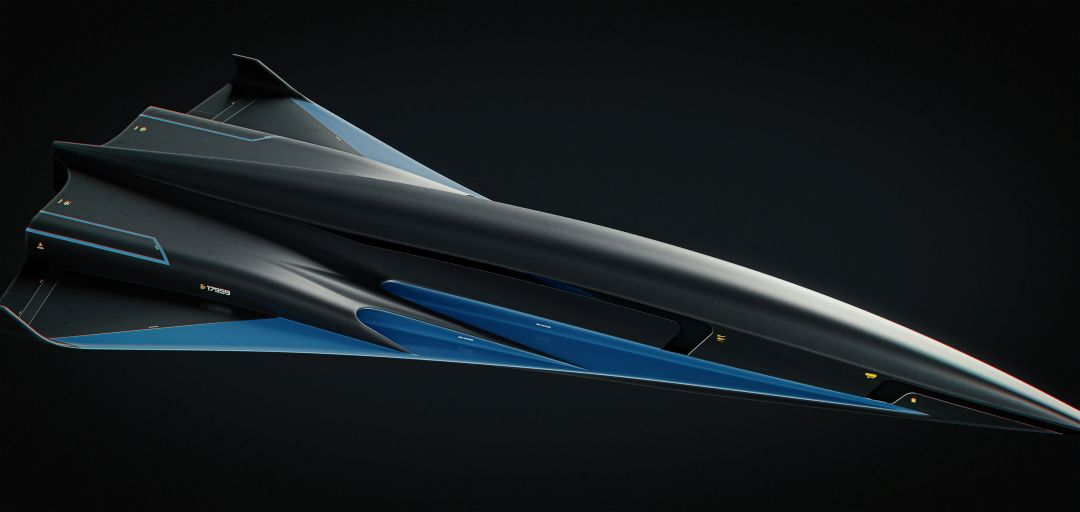
Applications of Aerodynamics
Aviation
In aviation, aerodynamics fundamentally determines the ability to fly. Every design, from commercial aircraft to fighter jets and drones, is based on precise aerodynamic calculations.
Wind Energy
Wind turbines convert the kinetic energy of wind into electrical energy. Rotor blade geometry follows aerodynamic principles to achieve maximum energy yield across different wind speeds.
Motorsport
In motorsport, aerodynamics can determine victory or defeat. Formula 1 cars generate downforce through sophisticated aerodynamics, which effectively presses them onto the track and enables higher cornering speeds.
Building Aerodynamics
Skyscrapers and large structures must safely withstand wind loads. Aerodynamic analyses help architects and structural engineers design buildings that are stable and comfortable.
Modern Measurement Technology and Visualization
Particle Image Velocimetry (PIV)
PIV systems make flows visible by tracking microscopic particles in the flow and calculating their velocity vectors. This technique provides detailed insights into complex flow structures.
Pressure Sensing and Force Measurement
Modern pressure sensors capture surface pressure distributions with high spatial and temporal resolution. Force balances simultaneously measure the resulting aerodynamic forces and moments.
Future Perspectives in Aerodynamics
Artificial Intelligence in Aerodynamics
Machine learning is revolutionizing aerodynamic development processes. AI algorithms identify optimal geometries faster than traditional methods and often discover unconventional solution approaches.
Biomimetic Approaches
Nature provides fascinating models for aerodynamic optimization. Shark skin like structures can reduce skin friction drag, while bird wing geometries inspire more efficient lifting surfaces.
Sustainable Aviation
Future aircraft must become significantly more efficient. Laminar flow control, morphing wings, and alternative propulsion concepts such as hydrogen require entirely new aerodynamic approaches.
Conclusion
Aerodynamics forms the foundation for numerous technological innovations in aviation, automotive engineering, energy technology, and many other fields. Understanding flow phenomena, pressure distributions, and the resulting forces enables the development of more efficient and higher performing products. Modern development methods such as CFD simulation, AI supported optimization, and advanced measurement technology open up entirely new possibilities.
Companies that consistently integrate aerodynamic principles into their product development secure decisive competitive advantages through higher efficiency, better performance, and innovative solution approaches.
Would you like to use aerodynamic optimization for your product? We support you with state of the art CFD simulation and many years of expertise in aerodynamic development. Contact Felsaris for an individual consultation about your project.
Frequently Asked Questions About Aerodynamics
How are aerodynamic forces calculated?
Aerodynamic forces are calculated using the formula F = 1/2 × ρ × v² × A × C, where ρ is air density, v is velocity, A is the reference area, and C is the relevant force coefficient. Modern CFD simulations compute these values automatically for complex geometries.
Why is turbulence important in aerodynamics?
Turbulence significantly affects heat transfer, mixing processes, and pressure losses. In some applications turbulent flow is desirable because it improves mixing, while in others it should be avoided to reduce drag.
Which software is used for aerodynamic simulations?
Professional CFD software such as ANSYS Fluent, STAR CCM+, or OpenFOAM solves the Navier Stokes equations numerically. The choice depends on complexity, budget, and specific requirements.
Can aerodynamics be important at low speeds?
Yes, aerodynamic effects matter even at low speeds. In ventilation systems, wind turbines, or buildings, precise flow analyses are essential for optimal function.
How does aerodynamics differ from hydrodynamics?
Aerodynamics deals with gas flows, usually air, while hydrodynamics studies liquid flows. The fundamental equations are similar, but the material properties such as compressibility and viscosity differ significantly.