.svg)
.svg)

BMF Research Allowance: How to Secure Tax Benefits for R and D
BMF Research Allowance: Learn how to claim 25% of eligible R and D costs as tax relief, submit applications efficiently, and combine support with ZIM funding.

BMF Research Allowance: A Central Pillar of Innovation Support
The Federal Ministry of Finance (BMF) plays a crucial role in promoting research and development in Germany. With the BMF research allowance, the BMF has created a tax based support instrument that helps companies pursue innovation projects with minimal bureaucracy. This form of innovation support enables businesses of all sizes to receive tax relief for their research activities while strengthening their competitiveness.
The research allowance is a direct response by the BMF to the challenges German companies face in global innovation competition. By combining tax relief with administrative simplification, the Federal Ministry of Finance creates optimal conditions for technological progress and economic growth.
What is the research allowance and how does it work?
The research allowance is a tax incentive introduced by the Federal Ministry of Finance that grants companies direct financial relief for their expenditures on research and development (R and D). Unlike project based funding programs, this is a legal entitlement that any taxable company with a registered seat in Germany can claim.
What makes the BMF research allowance special is its structural simplicity. Companies receive 25 percent of their eligible R and D expenditures back as tax relief. This amount is either offset against income tax or corporate income tax, or paid out as a tax refund if it exceeds the tax liability.
The maximum assessment base is currently 10 million euros per company per year, which corresponds to a maximum annual research allowance of up to one million euros. This cap makes the research allowance especially attractive for small and medium sized enterprises, which often do not have the resources for complex application procedures.
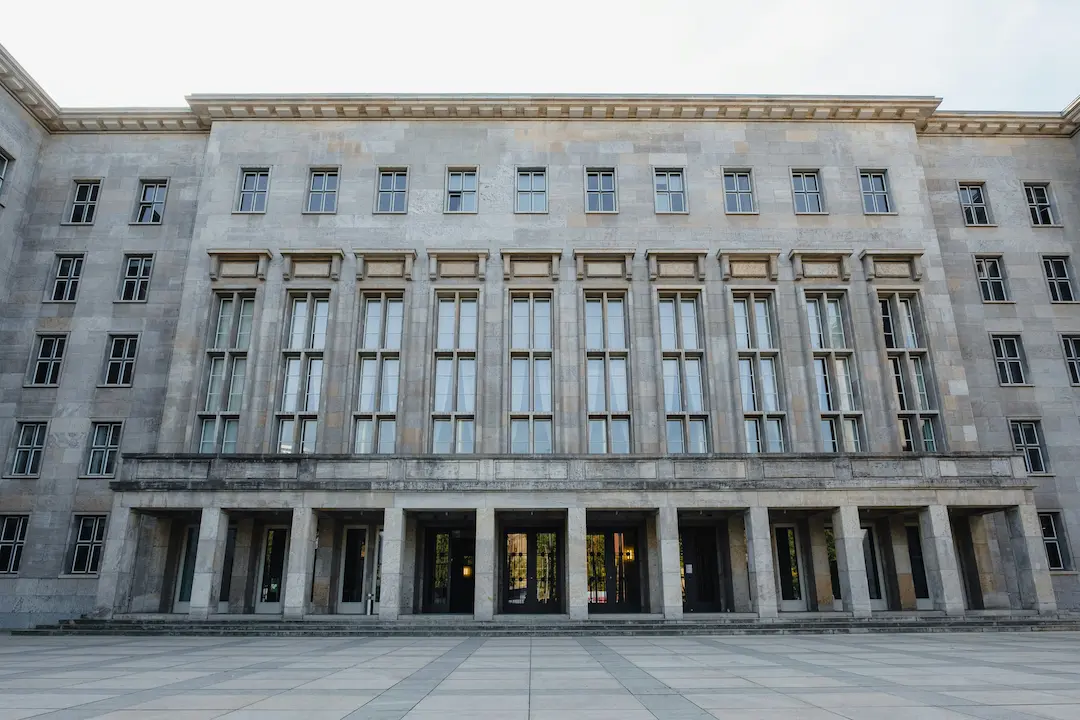
The BMF as a key actor in German innovation policy
By shaping the tax framework, the Federal Ministry of Finance holds a key position in German innovation policy. While other ministries manage project specific programs such as ZIM, the BMF provides broad, topic open baseline support through the research allowance.
This strategic positioning allows the BMF to promote research and development independently of political priorities or current technology trends. As a result, companies that want to develop long term R and D strategies gain a reliable planning basis.
The BMF works closely with the Research Allowance Certification Office (BSFZ), which as a subordinate authority carries out the technical assessment of submitted R and D projects. This division of responsibilities ensures both tax law accuracy and technical expertise in the evaluation.
Eligible R and D costs in detail
The BMF research allowance covers three key cost categories that are particularly relevant for innovative companies. Gross wages for employees who are directly involved in eligible R and D projects often make up the largest share of eligible costs.
In addition, companies can claim a lump sum for their own internal expenditure that covers indirect costs such as energy consumption, materials, or depreciation. For contract research, meaning commissioning R and D services from external providers, 60 percent of the contract amount is eligible.
This structure reflects the different development models used by modern companies, ranging from classic in house research to hybrid approaches and fully outsourced R and D activities. The contract research rule offers significant advantages, especially for start ups and small and medium sized enterprises that often rely on specialized development partners.
Procedure and administrative implementation
The two stage application process for the research allowance reflects the division of responsibilities between the BMF and the BSFZ. In the first step, the certification office checks whether the submitted R and D project meets the legal requirements. Three criteria are central. The project must aim at something new, involve scientific or technical uncertainty, and be carried out in a planned and systematic way.
After successful certification by the BSFZ, the documents are automatically forwarded to the responsible tax office. The tax office then performs the final review under tax law and determines the research allowance. This procedure ensures a clear separation between technical assessment and tax processing.
Applications are submitted on a fiscal year basis. This means that companies with multi year projects must file a separate application for each fiscal year. This structure makes it possible to benefit from the incentive each year, even for long term development projects.
Research allowances as an instrument for SME support
The BMF research allowance was designed specifically as an instrument to strengthen small and medium sized enterprises. While large corporations often have dedicated departments for managing public funding, the low bureaucracy of the research allowance offers SMEs an accessible entry into innovation support.
The BMF is pursuing a deliberate democratization of R and D funding. Regardless of company size or industry, all taxable businesses have the same opportunity to receive support. This equal treatment is especially important for innovative start ups, which often do not yet have established relationships with research institutions or funding bodies.
The combination of a legal entitlement and a standardized procedure also reduces uncertainty in financial planning. Companies can already factor the research allowance into the budgeting of their R and D activities and align their innovation investments accordingly.
Distinction from other funding programs
The BMF research allowance complements the German funding system in an optimal way without competing with existing programs. While project specific funding such as ZIM or Horizon Europe targets particular innovation projects or international cooperation, the research allowance provides baseline support for all R and D activities.
This complementarity allows companies to combine different funding instruments. For example, a business can claim both the specific ZIM funding and the tax based research allowance for a ZIM project, provided the respective rules are observed.
In this way, the BMF creates a form of funding infrastructure that functions independently of political priorities or budget cycles. This reliability is essential for long term R and D planning and strengthens Germany as a location for innovation.
Success factors and optimization potential
The effectiveness of the BMF research allowance depends heavily on practical implementation. Companies should take the specific requirements of the research allowance into account as early as the project planning stage in order to achieve maximum funding effects.
A key factor is the correct distinction between eligible R and D activities and non eligible routine or administrative tasks. Structured project documentation and clearly defined work packages help avoid reductions during approval.
For companies applying for the research allowance for the first time, early consultation with specialized experts is recommended. These experts can support not only the application process but also provide valuable input for the strategic alignment of R and D activities.

Digitalization and future development
The BMF is continuously working on the digitalization of the application process for the research allowance. Electronic submissions and automated review processes are intended to further reduce the administrative burden for companies.
At the same time, the ministry is steadily developing the legal framework of the research allowance to reflect new technology trends and changing innovation patterns. Topics such as artificial intelligence, sustainable technologies, and digital transformation are a key focus.
International coordination of the German research allowance with similar instruments in other EU member states is also being advanced. This is intended to facilitate cross border R and D cooperation and strengthen the attractiveness of Germany as a research location.
Strategic importance for the German economy
The BMF research allowance is more than a tax incentive. It is a strategic element of German innovation policy. Thanks to broad availability and streamlined administration, it makes a major contribution to strengthening Germany's R and D landscape.
Economic studies show that tax based R and D incentives such as the research allowance can generate significant multiplier effects. Every euro of R and D expenditure supported by the allowance leads to additional private investment in innovation and technology development.
The BMF thereby positions Germany in international location competition and contributes to safeguarding technological sovereignty. This is strategically important, especially at a time of global supply chain challenges and geopolitical tensions.
Conclusion: The BMF as a driver of Germany's innovation landscape
With the BMF research allowance, the Federal Ministry of Finance has created a highly efficient instrument that sustainably strengthens Germany's innovation landscape. The combination of tax relief, a legally secure procedure, and broad availability makes the research allowance a central building block of German R and D support.
For companies, the research allowance provides a reliable basis for planning and financial support for innovation projects. The BMF's strategic role as an enabler of research and development secures the long term competitiveness of Germany as a business location.
Make use of the opportunities offered by the BMF research allowance for your company. Felsaris supports you in fully leveraging all available funding instruments and in strategically aligning your R and D activities. Contact us for a free initial consultation and maximize your innovation support.
Frequently asked questions about the BMF research allowance
Can the BMF research allowance be combined with other funding?
Yes, the research allowance can generally be combined with other funding programs, provided there are no explicit exclusion criteria. When combining it with EU state aid or other public funding, the applicable cumulation rules must be observed. Professional advice helps ensure that all available funding instruments are used in the best possible way.
Which companies cannot apply for the research allowance?
The research allowance is available to all taxable companies with a permanent establishment in Germany. Only undertakings in difficulty within the meaning of EU state aid law are excluded, as well as businesses that do not meet certain tax law requirements. Non profit organizations without commercial activity also cannot use the allowance.
How long does the approval process take for the research allowance?
The procedure is divided into two phases. The Research Allowance Certification Office (BSFZ) typically needs 3 to 6 months for the technical review. After that, the tax assessment by the tax office takes another 2 to 4 months. Complete and correctly submitted applications are processed more quickly.
What happens during a tax audit regarding the research allowance?
During tax audits, the R and D projects and expenditures underlying the research allowance are reviewed. Companies should therefore maintain complete project documentation and retain all relevant evidence. Proper bookkeeping and a clear distinction between eligible and non eligible activities significantly reduce audit risk.