.svg)
.svg)

Engineer: Meaning, Responsibilities, Differences and Career
Engineer explained clearly: learn the definition, legal protection in Germany, key responsibilities, differences vs. technician or scientist, and career paths.
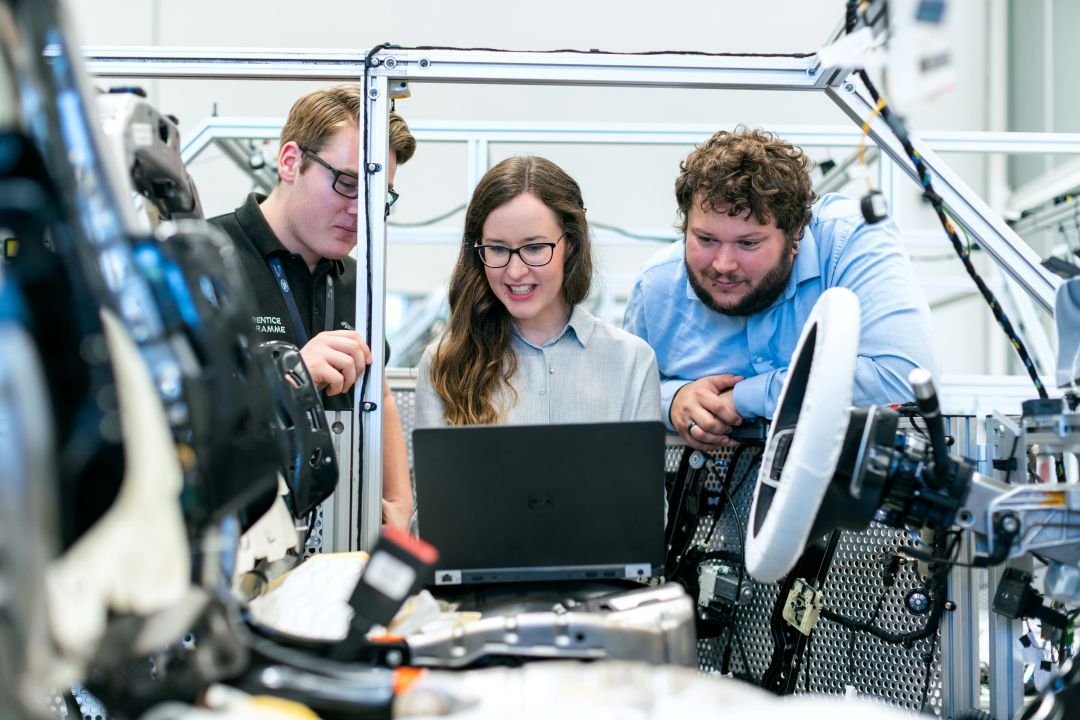
What Is an Engineer? Meaning, Responsibilities, and Differences
An engineer is a legally protected professional title in Germany for academically trained specialists in technology and engineering sciences. Since the 1970s, this title may only be used by graduates of a technical or natural sciences degree program at a recognized higher education institution with a standard period of study of at least three years. Engineers combine creative, scientific, and technical skills to develop innovative solutions, design products, and master complex technical challenges.
Definition and Legal Foundations of the Engineering Profession
In Germany, the professional title "Ingenieur" or "Engineer" has been strictly protected by 16 state laws (engineering laws) since 1970. This legal framework prevents unqualified use of the title and ensures that only people with the corresponding university degree are allowed to call themselves engineers.
Requirements for the Professional Title
To use the title Engineer or Ingenieur, the following conditions must be met:
- Completed degree at a state recognized higher education institution
- Standard period of study of at least three years (six semesters)
- Technical or natural sciences degree program
- Degree programs such as mechanical engineering, civil engineering, electrical engineering, computer science, or process engineering
This regulation distinguishes Germany from other countries, where the term "engineer" is sometimes less strictly regulated.
Core Responsibilities and Fields of Work for Engineers
Engineers take on a wide range of tasks in modern industry and research. Their work covers the entire development chain from the first idea to a market ready product.
Product Development and Design
Engineers develop innovative technical solutions through:
- CAD based design and 3D modeling
- Creation of manufacturing drawings and bills of materials
- Development of prototypes and validation of functionality
- Optimization of existing products for improved performance
Simulation and Analysis
Modern engineers use computer aided methods for:
- CFD simulations for flow and thermal analysis
- FEM calculations for structural analyses
- Virtual validation before physical implementation
- Optimization of designs through iterative simulation cycles
Project Management and Coordination
Engineers coordinate complex development projects through:
- Planning and monitoring development cycles
- Coordinating interdisciplinary teams
- Quality assurance and compliance with standards
- Communication with customers, suppliers, and manufacturing partners
What Is a Systems Engineer?
A systems engineer is a specialization within engineering disciplines that focuses on the holistic view of complex technical systems. Systems engineers work at the interface of different fields and ensure that all components of a system work together optimally.
Responsibilities of a Systems Engineer
Systems engineers take on specific responsibilities:
- Analysis and definition of system requirements
- Integration of different subsystems into fully functioning overall systems
- Coordination between development teams from different disciplines
- Risk assessment and quality assurance at the system level
- Optimization of system performance and reliability
Areas of Application
Systems engineers work in various industries:
- Automotive industry: integration of powertrain, electronics, and safety systems
- Aerospace: coordination of complex aircraft or satellite systems
- Energy engineering: development of intelligent power grids and energy storage
- Information technology: design of distributed software and hardware systems
What Is a Senior Engineer?
A senior engineer is an experienced engineer with extensive expertise and leadership responsibility. This position is usually reached after several years of professional experience and proven competence in complex projects.
Qualifications and Experience
Senior engineers are characterized by:
- At least 5 to 10 years of professional experience in relevant fields
- In depth knowledge of specialized technologies and methods
- Demonstrated success in project leadership and team management
- Expertise in modern development tools and methods
Responsibilities
Senior engineers take on expanded tasks:
- Technical leadership of development teams
- Mentoring and training junior engineers
- Strategic technology decisions and architecture designs
- Customer consulting and presentation of technical solutions
- Evaluation and introduction of new technologies
Career Development
Senior engineers can develop in different directions:
- Technical specialization as a principal engineer or technical expert
- Management track as an engineering manager or CTO
- Founding their own engineering offices or consulting firms
- Transition into research and development

Differences Compared to Other Technical Professions
Engineers differ from other technical professions through specific qualifications and areas of responsibility.
Engineer vs. Technician
The difference between engineers and technicians lies in education and scope of work.
Engineers:
- University degree with a strong theoretical foundation
- Focus on development, innovation, and problem solving
- Responsibility for complex systems and strategic decisions
Technicians:
- State certified qualification after professional advanced training
- Focus on practical implementation and maintenance
- Specialization in specific technologies or processes
Engineer vs. Scientist
While scientists primarily focus on gaining knowledge, engineers concentrate on practical application.
Engineers:
- Application oriented problem solving
- Development of marketable products and systems
- Balancing technical feasibility with economic efficiency
Scientists:
- Basic research and theory development
- Publication of research results
- Long term scientific questions
Modern Developments in Engineering
Engineering disciplines continue to evolve and integrate new technologies and methods.
Digitalization and AI in Engineering
Modern engineers increasingly use:
- Machine learning and AI for optimization processes
- Data driven development approaches with Design of Experiments (DoE)
- Cloud based simulation platforms for improved scalability
- GPU accelerated computing for complex analyses
Sustainability and Environmental Engineering
Engineers develop solutions for global challenges:
- Hydrogen technologies for zero emission powertrains
- Energy efficient systems and circular economy approaches
- Development of renewable energy systems
- Optimization of existing technologies for improved environmental compatibility
Interdisciplinary Collaboration
Modern product development increasingly requires interdisciplinary approaches:
- Collaboration between mechanical engineering, electronics, and software
- Integration of designers, marketing experts, and engineers
- Agile development methods for faster innovation cycles
- Customer centered development approaches

Career Paths and Specialization Opportunities
Engineers have many options for professional development and specialization.
Technical Specializations
Depending on interest and market requirements, engineers can specialize in:
- Fluid dynamics and CFD simulation
- Design engineering and product design
- Automation and robotics
- Environmental engineering and sustainability
- Digitalization and IoT
Industries and Application Fields
Engineers find employment in numerous industries:
- Automotive industry: development of powertrains, chassis, and safety systems
- Mechanical engineering: design of production systems and tools
- Energy engineering: development of power plants and renewable energy systems
- Aerospace: design of aircraft, satellites, and space vehicles
Conclusion
Engineers are highly qualified professionals with a legally protected title who solve complex technical challenges through systematic, scientifically grounded approaches. They differ from other technical professions through their comprehensive theoretical education and their ability to develop innovative solutions. With specializations such as systems engineer or senior engineer, the engineering profession offers a wide range of career paths and development opportunities.
Modern engineering practice increasingly integrates digital technologies, AI, and sustainable approaches to meet the challenges of the 21st century. Felsaris stands for this modern and innovative approach as an engineering firm and supports companies in turning their technical visions into market ready reality.
Do you need support with your next engineering project? Contact Felsaris for a non binding consultation and learn how we can help drive your innovations forward.
Frequently Asked Questions (FAQ)
What requirements must I meet to be allowed to call myself an engineer?
You need a university degree in a technical or natural sciences program with a standard period of study of at least three years. The degree must have been obtained at a state recognized higher education institution.
Can I become an engineer as a career changer?
Yes, by completing a relevant degree program, career changers can also gain the right to call themselves an engineer. Many universities offer part time or distance learning programs.
What is the difference between a Diplom Ingenieur and a Bachelor engineer?
Both degrees entitle you to use the professional title engineer. The Diplom Ingenieur is a traditional German degree, while bachelor and master are international degrees within the bachelor master system.
What salary prospects do engineers have?
Engineers are among the well paid professionals. Starting salaries are usually between 45,000 and 55,000 euros per year, and significantly higher salaries are possible with experience and specialization.
How important are soft skills for engineers?
They are very important. Modern engineers must not only be technically competent, but also be able to communicate, work in teams, and coordinate projects. These skills are becoming increasingly important.