.svg)
.svg)

Product Development Explained: Phases, Methods, AI Tools
Product development explained: phases, methods, and AI tools that shorten time to market, increase quality, and reduce development risks.

Product Development Explained: The Path to Successful Innovation
Product development is the centerpiece of every innovative company. In an era in which technological progress and market dynamics determine competition, the quality of the development process decides the success or failure of new products. From the first idea to market launch, every product goes through a structured development path that is being revolutionized today by modern methods such as AI-driven simulation and data-driven optimization.
Companies that master systematic product development do not only create innovative solutions, but also significantly shorten time to market, reduce development risks, and establish sustainable competitive advantages. Modern product development combines traditional engineering methods with digital technologies such as CAD, CFD, and rapid prototyping into an integrated approach that maximizes efficiency and precision.
What is product development and why is it crucial?
Product development includes the entire process of creating and launching products that meet specific customer needs. This includes both the improvement of existing solutions and radical innovations that open up new markets. Modern product development integrates engineering expertise with market understanding and technological innovation.
Its strategic importance lies in maintaining competitiveness through continuous innovation. Companies that systematically advance their products can differentiate themselves from competitors, achieve higher margins, and expand market share. Especially in technology-driven industries such as mechanical engineering, automotive, or energy engineering, innovation capability determines long-term business success.
Effective product development is characterized by structured processes, cross-functional collaboration, and the use of modern development tools. It connects market analysis with technical implementation and turns abstract ideas into market-ready products with measurable customer value.
Fundamentals and objectives of modern product development
The objectives of modern product development go far beyond solving a problem. The focus is on creating products that combine technical excellence with market relevance while generating economic success. Companies pursue several strategic goals in parallel, including entering new markets, strengthening market position, optimizing costs and development times, and establishing technological differentiators.
Modern development processes focus on measurable results. These include shorter time to market cycles, reduced development costs, higher product quality, and improved customer acceptance. At the same time, requirements for sustainability, energy efficiency, and compliance with industry standards are increasing.
Another central objective is risk reduction through early validation of product concepts. By using simulations, prototyping, and data-driven analyses, potential issues can be identified and fixed before they become costly development errors. This requires a systematic approach and the integration of state-of-the-art development methods.
Product development phases: The structured path to success
The phases of product development form the structural backbone of every successful innovation project. Each phase has specific objectives, methods, and outcomes that build on one another and ensure continuous progress.
Ideation and concept development
The first phase begins with systematic idea generation through market analyses, customer surveys, and trend monitoring. Modern companies use structured creativity methods such as design thinking to develop innovative solution approaches. Customer needs are identified, market gaps are analyzed, and technical feasibility is assessed.
Concept development turns promising ideas into concrete product visions. This is where initial technical specifications, functional descriptions, and basic design parameters are created. Cross-functional teams of engineers, designers, and market experts work together to develop realistic and marketable concepts.
Research and screening
In the research phase, ideas are evaluated and prioritized systematically. Market potential, technical feasibility, competitive situation, and resource requirements are analyzed. Only the most promising concepts pass the screening and are approved for further development.
Modern evaluation methods use quantitative scoring models, scenario analyses, and market forecasts. This creates data-based decision foundations that make subjective assessments more objective and minimize development risks.
Design and engineering
The design phase transforms concepts into concrete technical solutions. CAD systems enable precise 3D modeling, while CFD simulations virtually validate flow behavior, heat transfer, and structural characteristics. Modern engineering teams use parametric design approaches and automated optimization algorithms to develop optimal solutions.
At the same time, feasibility studies, material selection, and the definition of manufacturing processes take place. The result is detailed design documentation that serves as the basis for prototyping and series production. The integration of sustainability aspects, cost optimization, and manufacturability are key success factors.
Prototyping and validation
Prototyping bridges the gap between digital development and physical reality. Rapid prototyping methods such as 3D printing enable fast and cost-effective production of functional prototypes. These are tested extensively to validate design hypotheses and identify optimization potential.
Modern validation strategies combine physical tests with virtual simulations. This produces meaningful results at reduced costs and shorter development times. Iterative optimization cycles lead to mature products that meet market requirements optimally.
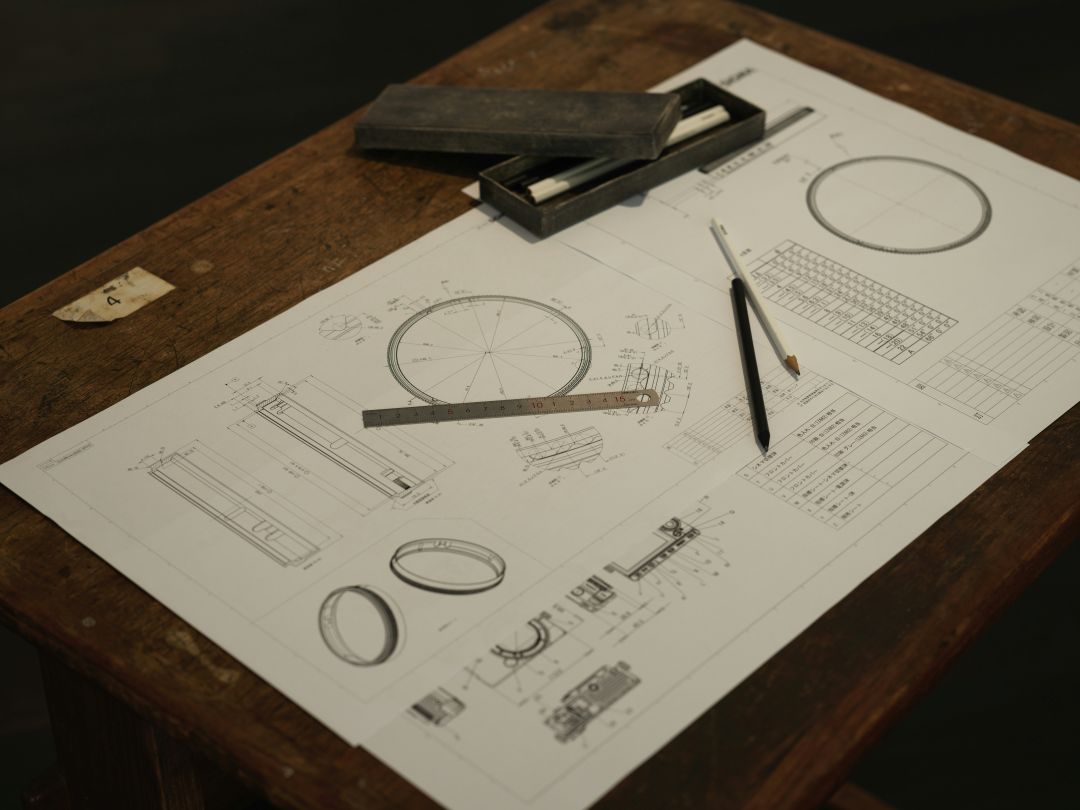
Product development phases: Modern methods and tools
Today, the different development phases are supported by advanced methods and digital tools that significantly increase the efficiency and quality of product development.
Digital development tools
Computer-aided design (CAD) is the foundation of modern product development. Parametric modeling enables rapid design changes and automated variant generation. The integration of PDM systems (Product Data Management) ensures consistency and traceability throughout the entire development process.
Computational Fluid Dynamics (CFD) is revolutionizing the development of flow systems. Complex flow phenomena are analyzed virtually before physical prototypes are built. This accelerates optimization cycles and enables the development of highly efficient systems in areas such as automotive, energy engineering, or mechanical engineering.
Finite element analysis (FEA) extends virtual validation to structural aspects. Stresses, deformations, and service life are evaluated through simulation, which avoids overengineering and increases material efficiency.
AI-driven development methods
Artificial intelligence and machine learning are transforming traditional development approaches. AI-based optimization algorithms systematically explore design spaces and identify optimal solutions that human engineers would not find intuitively.
Design of experiments (DoE) methods are enhanced by AI to understand and leverage complex parameter interactions. This results in data-driven development processes that deliver objective and reproducible outcomes.
Predictive analytics make it possible to forecast product behavior and market acceptance even in early development phases. This reduces development risks and supports strategic decisions.
Challenges and success factors
Modern product development faces a wide range of challenges that require systematic solutions. Shorter product life cycles increase time pressure, while technical complexity rises and regulatory requirements become stricter.
A shortage of skilled professionals in technical fields makes it harder to build internal development capabilities. Specialized engineering service providers offer solutions through flexible access to expertise and state-of-the-art development tools. This also enables smaller companies to use advanced development methods.
Cross-functional collaboration is becoming increasingly critical to success. Modern product development requires the interaction of mechanics, electronics, software, and IT. Successful companies establish integrated development teams and use digital collaboration platforms.
Budget constraints require optimal resource allocation. Smart companies focus on core competencies and outsource specialized development tasks to experienced partners. This reduces fixed costs and provides access to specialized know-how.

Trends and the future of product development
The future of product development is shaped by several megatrends. Digitalization permeates all development phases and enables entirely new approaches. Digital twins connect physical products with digital models and create the basis for continuous optimization throughout the entire product life cycle.
Sustainability is shifting from a nice-to-have to a must-have. Life cycle assessments, circular economy concepts, and CO2-neutral development fundamentally influence design decisions. Companies that integrate sustainability early create competitive advantages and meet rising customer expectations.
Additive manufacturing is revolutionizing prototyping and small-batch production. Complex geometries can be produced directly from digital models, increasing design freedom and functional integration. This opens up new possibilities for innovative product concepts.
Collaborative development models are gaining importance. Open innovation, co-creation with customers, and strategic partnerships accelerate development processes and improve market acceptance. Digital platforms enable global collaboration and knowledge sharing.
Conclusion: Systematic product development as an engine for innovation
Successful product development requires the optimal combination of structured processes, modern methods, and technological expertise. Companies that master these elements create innovative products that win markets and generate sustainable growth.
The integration of AI, simulation, and data-driven methods is revolutionizing traditional development approaches. However, human expertise in engineering disciplines and market understanding remains indispensable. The future belongs to hybrid development models that combine human creativity with machine efficiency.
For startups and SMEs, specialized engineering partners provide access to state-of-the-art development methods without the need for extensive internal investments. This democratizes innovation and enables smaller companies to develop technologically leading products.
Start professional product development now: Contact Felsaris for a free initial consultation and learn how modern development methods can lead your next innovation project to success.
Frequently asked questions about product development
What are the most important success factors for modern product development?
The most important success factors include a structured development process, cross-functional teamwork, and the systematic use of modern development tools. Early integration of simulations and prototyping is particularly crucial to minimize development risks. In addition, market orientation, continuous customer validation, and agile development methods are critical to success.
How long does a typical product development process take?
The duration varies greatly depending on product complexity, industry, and available resources. Simple products can be developed in 6 to 12 months, while complex technical systems require 2 to 5 years of development time. Modern methods such as concurrent engineering, AI-supported optimization, and digital validation can reduce development times by 30 to 50 percent.
What role do simulations play in modern product development?
Simulations are indispensable for efficient product development today. CFD analyses enable the virtual investigation of flow behavior, heat transfer, and aerodynamic properties. FEM simulations evaluate structural aspects and service life. This allows design variants to be compared quickly, optimization potential to be identified, and prototyping cycles to be minimized.
How can small companies finance modern product development?
Small companies use various financing models. Public funding programs support innovative development projects with high funding rates. Engineering service providers offer flexible on-demand models that provide development capacity without fixed costs. Strategic partnerships and co-development projects share development risks and costs.
What is the difference between classic and data-driven product development?
Classic product development is primarily based on experience and heuristic methods with sequential one-factor-at-a-time approaches. Data-driven development uses machine learning, DoE methods, and AI optimization algorithms for systematic exploration of the design space. This leads to objective, reproducible results and enables the identification of global rather than local optima.
How important is prototyping in the development process?
Prototyping is essential for validating design hypotheses and identifying optimization potential. Rapid prototyping through 3D printing enables fast and cost-effective production of functional prototypes. The combination of virtual simulation and physical validation minimizes development risks and significantly accelerates iteration cycles.