.svg)
.svg)

The Future of the Automotive Industry: Trends, AI, Autonomy
The future of the automotive industry: understand key trends like electrification, hybrids, SDVs, AI, and autonomy, including opportunities, risks, and practical implementation guidance.
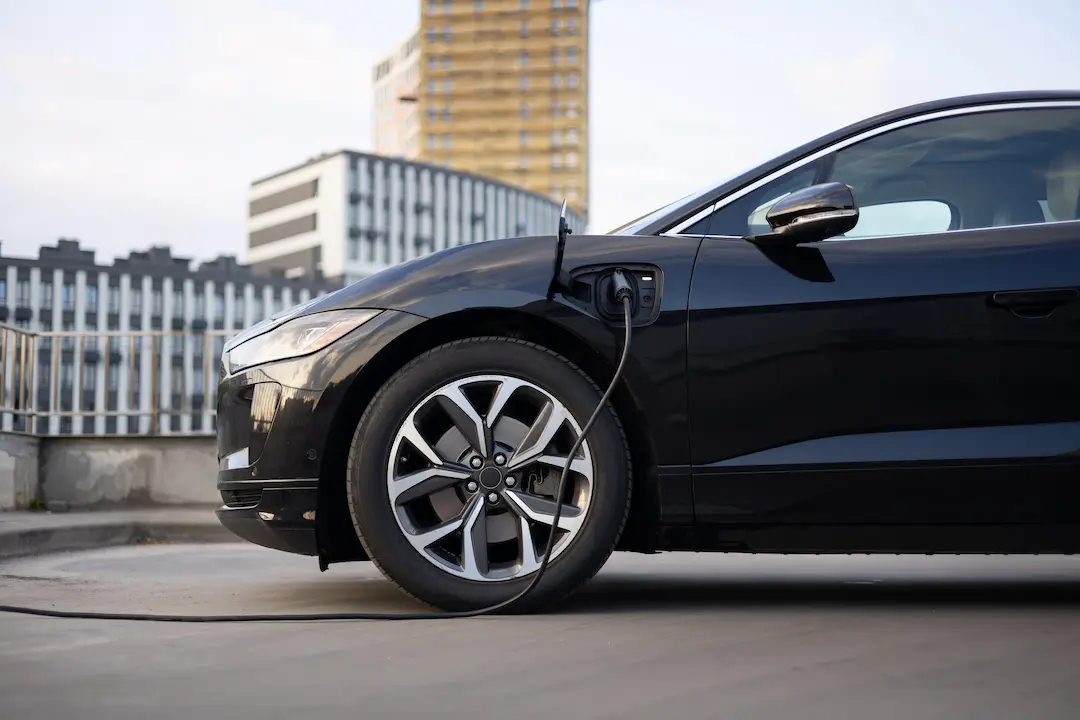
The Future of the Automotive Industry: Trends, Technologies
The future of the automotive industry will be decisively shaped by revolutionary technologies that redefine mobility. Electrification, artificial intelligence, and autonomous driving systems are transforming traditional vehicles into connected, software-driven platforms. This transformation offers enormous opportunities for innovation, but it also requires strategic adjustments to entirely new market dynamics and customer expectations.
Electrification and Hybrids in Focus
Electrification remains the central topic in the automotive industry, but it is developing more pragmatically than initially expected. While fully electric vehicles are losing momentum due to price barriers and infrastructure limitations, hybrid powertrains are gaining significant importance. Automakers such as Toyota, Honda, and Ford are increasingly pursuing multi-powertrain strategies to make the transition more affordable and customer-friendly.
This development shows that consumers prefer flexible solutions that offer both sustainability and everyday practicality. Hybrid vehicles make it possible to reduce emissions without having to accept range anxiety or the high purchase costs of fully electric vehicles. At the same time, manufacturers continue to invest in battery technology and charging infrastructure to enable the long-term transition to fully electric drivetrains.
Software-Defined Vehicles as a Model for the Future
The automotive industry is undergoing a fundamental shift from mechanical to software-controlled systems. Software-defined vehicles (SDVs) turn cars into rolling computers that can be continuously improved through over-the-air updates. This development opens up entirely new business models and customer relationships.
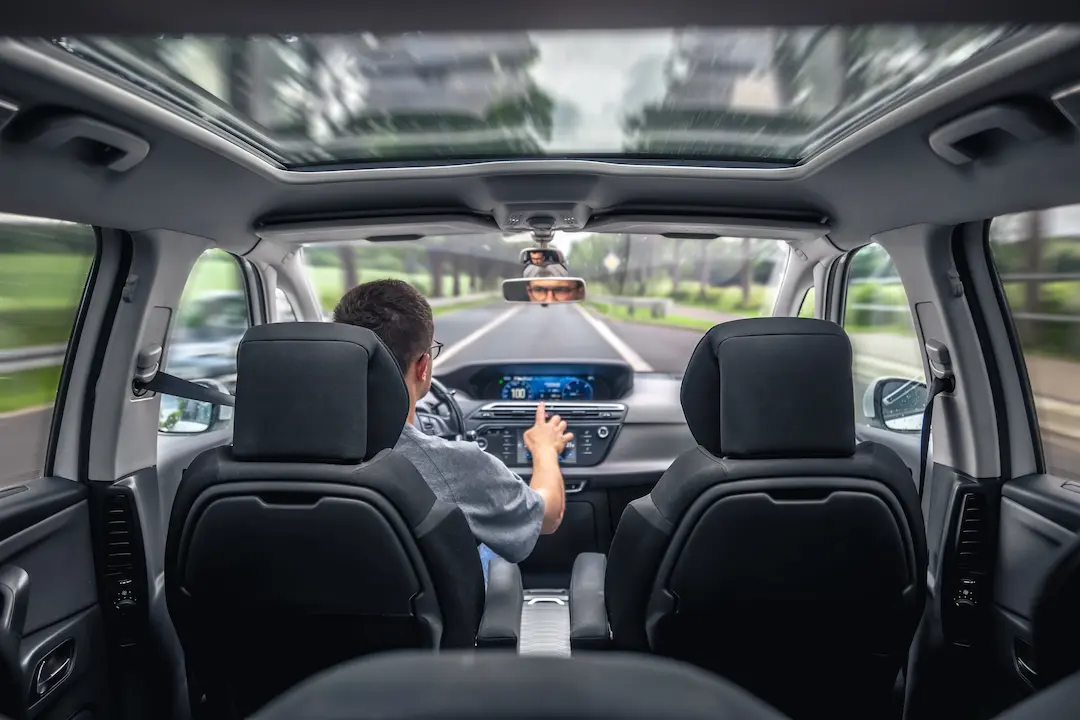
Modern vehicles already integrate AI-driven personalization, adaptive user interfaces, and predictive maintenance functions. V2X connectivity, meaning vehicle-to-everything, enables vehicles to communicate with infrastructure systems, other road users, and cloud services. This connectivity forms the foundation for autonomous driving systems and optimized traffic flows.
By 2031, an estimated 28 million vehicles will be equipped with GenAI chatbots that function as intelligent assistants. This technology changes how drivers interact with their vehicles and creates new opportunities for comfort, safety, and efficiency.
Autonomous Driving and Connected Mobility
The development of autonomous vehicles is progressing steadily, with Level 3 systems already available in premium vehicles. Advanced driver assistance systems (ADAS) are becoming standard equipment, while by-wire technologies such as steer-by-wire and brake-by-wire enable more precise control and new design possibilities.
Ride-hailing services with autonomous vehicles will initially be introduced in controlled environments, as demonstrated by Volkswagen in Austin. This gradual rollout makes it possible to gain experience and continuously improve the technology before it is deployed in more complex traffic situations.

The Future of the German Automotive Industry
The German automotive industry faces particular challenges in this transformation. Traditional strengths in internal combustion engine engineering must be transferred into new areas of expertise. German manufacturers are investing heavily in electric mobility, hydrogen technologies, and digitalization to maintain their market position.
New opportunities are emerging for German companies, especially in the field of hydrogen powertrains (H2ICE). This technology makes it possible to use existing engine expertise for sustainable propulsion. Hydrogen combustion engines deliver zero CO2 emissions while relying on familiar technology, which makes them attractive for commercial vehicles and specialized applications.
Felsaris supports companies in converting conventional engines to hydrogen operation. Through precise simulations and validated prototypes, high-performance H2ICE systems are created that achieve 100 percent of the original gasoline performance. This expertise enables German manufacturers to establish technological leadership in new powertrain technologies.
Sustainability and the Circular Economy
Sustainability is becoming a key differentiator in the automotive industry. Manufacturers are focusing not only on alternative drivetrains, but also on sustainable materials, recycling, and circular economy concepts. Lightweight materials reduce vehicle weight and improve efficiency, while innovative manufacturing methods such as gigacasting optimize production.
Developing sustainable vehicles requires holistic approaches that begin in the design phase. By using advanced simulation technologies, engineers can minimize material usage, optimize structures, and maximize service life. These methods help ensure that vehicles become more environmentally friendly not only during use, but across the entire lifecycle.
AI in the Automotive Industry
Artificial intelligence is revolutionizing not only the vehicles themselves, but also their development and production. AI-driven design processes significantly accelerate product development and make it possible to perform complex optimizations that would not be feasible with conventional methods.
Machine learning algorithms analyze large volumes of data from simulations, test drives, and production processes to identify patterns and make predictions. These insights flow directly into the design of new vehicles and improve safety, efficiency, and customer satisfaction.
Surrogate models replace time-consuming physical tests with AI-based predictions that deliver results 120 times faster. Felsaris uses these technologies to drastically shorten development cycles while increasing the accuracy of simulations. Trial-and-error approaches are replaced by data-driven optimizations that automatically identify the best design solutions.
Integrating AI into existing CAD and CFD environments enables engineers to carry out complex flow optimization, thermal management, and structural analyses more efficiently. This technology is especially valuable for startups and small and medium-sized enterprises that need to develop innovative solutions with limited resources.
Challenges and Risks
The transformation of the automotive industry also brings significant challenges. Trade uncertainty, particularly due to US tariffs, is weighing on global production. China’s dominance in battery technologies and rare earths creates dependencies that carry strategic risks.
At the same time, uneven EV demand in Europe leads to planning uncertainty. Manufacturers must develop flexible production concepts that can respond quickly to market changes. Investments in new technologies require long-term strategies, while market conditions can change rapidly.
Supply chain risks for semiconductors and other critical components remain. Companies are therefore investing in local production capacities and diversified supplier networks to reduce dependencies.
Innovation Through Simulation and AI
The future of the automotive industry will largely be determined by the ability to develop innovative technologies quickly and cost-effectively. Modern simulation methods, combined with artificial intelligence, make it possible to create virtual prototypes that largely replace physical testing.
This development is especially important for smaller companies that do not have the resources of large corporations. Through the targeted use of CFD simulations, machine learning, and automated optimization algorithms, startups and mid-sized businesses can also develop innovative vehicle technologies.
Felsaris combines advanced simulation with AI-driven optimization to reduce development times from years to months. This capability is crucial for remaining competitive in a fast-moving market while continuing to drive innovation.
Conclusion
The future of the automotive industry will be shaped by the convergence of multiple technologies. Electrification, artificial intelligence, autonomy, and sustainability are merging into entirely new mobility concepts. Companies that pursue flexible strategies and rely on data-driven development methods will succeed in this transformation.
The German automotive industry can transfer its traditional strengths into new technology domains, particularly hydrogen technology and AI-driven development. The key is to combine proven engineering expertise with state-of-the-art simulation methods and artificial intelligence.
Help shape the future of mobility. Schedule a consultation with Felsaris today and learn how AI-driven simulation and hydrogen technologies can position your company for the automotive industry of tomorrow.
Frequently Asked Questions
How is artificial intelligence changing the automotive industry?
AI is revolutionizing both vehicle development and the vehicles themselves. In development, surrogate models and machine learning enable design optimizations that are 120 times faster. In vehicles, AI assistants, predictive maintenance, and autonomous functions improve safety and comfort.
Why are hybrid vehicles gaining importance?
Hybrids bridge the transition to electric mobility in a pragmatic way. They reduce emissions without range anxiety or high charging infrastructure costs. Consumers value the flexibility of multi-powertrain systems, while manufacturers minimize development risks.
What role will hydrogen engines play in the future?
H2ICE engines deliver zero CO2 emissions using familiar technology. They are especially suitable for commercial vehicles and applications with high energy demand. German manufacturers can use them to transfer their engine expertise into sustainable propulsion.
How are autonomous vehicles evolving?
Autonomous systems are developing step by step, from Level 3 in premium vehicles to fully autonomous ride-hailing services in controlled environments. By-wire technologies and V2X connectivity provide the technical foundation for this development.
What do software-defined vehicles mean for consumers?
SDVs enable continuous improvements through over-the-air updates, personalized user experiences, and new services. Vehicles become rolling computers that adapt to individual needs and continuously receive new functions.