.svg)
.svg)

Thermodynamics Explained Simply: Fundamentals, Laws, Practice
Thermodynamics made easy: Learn systems, state variables, the first and second laws, entropy, and applications, including practical engineering, CFD, and AI approaches.

What Is Thermodynamics? Fundamentals Explained Simply
Thermodynamics, also known as the study of heat, is a fundamental discipline of physics that deals with energy transformations in systems. It explains how heat, temperature, pressure, and volume interact and forms the scientific foundation for all industrial processes that involve energy conversion. From developing efficient internal combustion engines to optimizing cooling systems, thermodynamics is a key driver of technical innovation.
Fundamentals of Thermodynamic Systems
Thermodynamic systems can be classified according to how they interact with their surroundings. An open system can exchange both energy and matter with its environment, such as an internal combustion engine that takes in fuel and releases exhaust gases. Closed systems exchange energy but not matter, while isolated systems are completely separated from their surroundings.
This distinction is crucial for engineering applications. When developing heat exchangers or cooling systems, it is necessary to calculate precisely how energy is transferred across different system boundaries. Modern CFD simulations use these thermodynamic fundamentals to predict complex heat transfer processes and to optimize technical systems.
The state variables of a thermodynamic system, such as temperature, pressure, volume, and internal energy, fully describe its current state. When these parameters change, this is referred to as a thermodynamic process. A distinction is made between reversible processes, which are theoretically reversible, and irreversible processes, which dominate in reality.

The First Law of Thermodynamics
The first law of thermodynamics states the principle of conservation of energy for thermodynamic systems. It says that the change in a system’s internal energy equals the heat added to the system minus the work done by the system. Mathematically: ΔU = Q - W.
This principle has far-reaching practical consequences. In internal combustion engines, the chemical energy of the fuel is converted into heat, which in turn produces mechanical work. The efficiency of such processes is limited by the first law, since not all supplied energy can be converted into useful work.
In the development of hydrogen internal combustion engines, the application of the first law is particularly relevant. Hydrogen has a high energy content per unit mass, which makes thermodynamic calculations for engine design more complex. Precise energy balancing makes it possible to determine optimal operating parameters and to implement emission-free propulsion concepts.
The Scope of Thermodynamics
Thermodynamics includes various subfields and application areas that are central to engineering practice. Classical thermodynamics deals with macroscopic systems and uses empirical laws without considering the molecular structure of matter.
An important subfield is engineering thermodynamics, which focuses specifically on engineering applications. Practical questions such as optimizing cycles, designing heat engines, or developing efficient cooling methods take center stage.
Statistical thermodynamics links macroscopic thermodynamic properties to the microscopic behavior of atoms and molecules. This understanding is especially relevant when developing new materials or modeling complex combustion processes, where molecular reaction mechanisms play a decisive role.
Modern applications extend thermodynamics with numerical methods and simulation techniques. CFD analyses combine thermodynamic principles with fluid mechanics equations to model complex heat transfer processes in technical systems with high precision.
Chemical Thermodynamics
Chemical thermodynamics examines energy transformations during chemical reactions and phase transitions. It is essential for understanding combustion processes, catalysis, and material conversions in industrial systems.
Reaction enthalpy and Gibbs free energy are key quantities that determine whether a chemical reaction proceeds spontaneously and how much energy is released or required. Exothermic reactions release energy, while endothermic processes require energy.
In combustion engineering, chemical thermodynamics enables the calculation of combustion temperatures, the prediction of pollutant formation, and the optimization of combustion chambers. Modern reaction mechanisms account for hundreds of elementary reactions in order to simulate complex combustion processes such as hydrogen combustion with high accuracy.
The Gibbs Helmholtz equation and chemical equilibrium are other important concepts used in the process industry. They make it possible to determine optimal reaction conditions and to maximize yields.
Entropy and the Second Law of Thermodynamics
The second law of thermodynamics introduces the concept of entropy and states that the entropy of an isolated system never decreases. Entropy is a measure of the disorder of a system and explains why certain processes are irreversible.
This principle has practical consequences for all energy conversion processes. Heat flows spontaneously only from higher to lower temperatures, and not all heat can be fully converted into mechanical work. This fundamental limitation determines the theoretical efficiencies of heat engines.
The Carnot cycle defines the theoretical maximum efficiency between two heat reservoirs at different temperatures. Real machines never reach this ideal value because irreversible losses occur. Modern optimization strategies aim to minimize these losses and to approximate Carnot efficiency as closely as possible.
In refrigeration engineering and heat pumps, the second law makes it possible to calculate the theoretically minimal required driving energy. These thermodynamic limits are crucial for developing efficient cooling systems and for evaluating different refrigerants.
Applications in Engineering Practice
The practical importance of thermodynamics is evident in nearly all technical fields. In flow optimization, thermodynamic principles are used to reduce pressure losses and to improve heat transfer. CFD simulations account for both convective and conductive heat transfer.
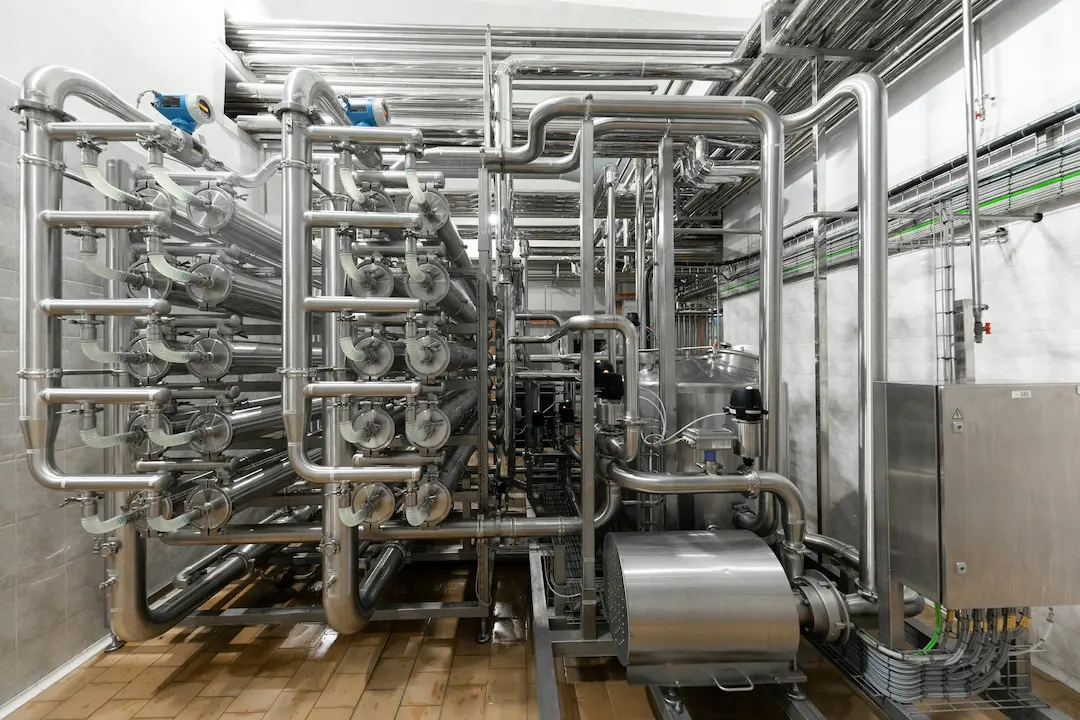
In the development of cooling systems, thermodynamics is indispensable. Electronic components, batteries, or fuel cells must be cooled precisely to prevent overheating. The design of heat sinks, heat exchangers, or cooling loops is based on thermodynamic calculations.
Engine development is a classic application area of thermodynamics. Modern combustion simulations combine thermodynamic laws with detailed chemical reaction mechanisms to increase efficiency and reduce emissions.
Hydrogen internal combustion engines pose particular thermodynamic challenges because hydrogen has specific combustion characteristics. Different flame speeds and ignition behavior require adapted engine concepts that rely on precise thermodynamic analyses.
Thermodynamics in the Digital Age
Modern engineering methods integrate classical thermodynamics with digital simulation techniques. Machine learning and artificial intelligence make it possible to analyze and optimize complex thermodynamic processes. Surrogate models can accelerate thermodynamic calculations without sacrificing accuracy.
Design of Experiments (DoE) combined with thermodynamic modeling enables the systematic optimization of technical systems. Instead of varying individual parameters, multivariate optimization strategies can be developed that account for thermodynamic relationships.
Data driven product development uses thermodynamic fundamentals to identify optimal design variants from large datasets. These approaches are particularly successful in the development of complex systems such as fuel cells or heat pumps.
The integration of IoT sensors enables continuous monitoring of thermodynamic parameters in real systems. These data can be used to validate simulation models and to support predictive maintenance.
Future Perspectives of Thermodynamics
Thermodynamics will remain a key technology for sustainable energy systems in the future. The development of renewable energy technologies, efficient energy storage, and emission-free propulsion is based on thermodynamic principles.
Hydrogen technologies are gaining importance as a climate-neutral alternative to fossil fuels. The thermodynamic optimization of electrolyzers, fuel cells, and hydrogen internal combustion engines is crucial for a successful energy transition.
Quantum thermodynamics investigates thermodynamic phenomena at the quantum mechanical level and could open new perspectives for energy conversion processes. This research is still in its early stages, but it already shows promising approaches for more efficient energy conversion.
The combination of thermodynamics with AI will enable entirely new optimization strategies. Self-learning systems could autonomously adjust thermodynamic parameters and continuously improve the efficiency of technical plants.
Conclusion
Thermodynamics is the scientific foundation for all energy conversion processes in engineering. From fundamental research to industrial application, thermodynamic principles enable the development of efficient and sustainable technologies. The first law defines energy conservation, while the second law sets fundamental limits on energy conversions.
Its practical importance is reflected in a wide range of applications, from optimizing internal combustion engines to developing innovative cooling systems and implementing hydrogen-based propulsion concepts. Modern simulation methods and AI-supported optimization approaches expand classical thermodynamics with new dimensions of product development.
For companies that want to develop innovative energy solutions, a solid understanding of thermodynamics is indispensable. Felsaris provides support in implementing thermodynamic concepts in practice through precise simulations, optimized product development, and validated prototype creation. Contact us for individual consulting on your thermodynamics project.
Frequently Asked Questions (FAQ)
What is the difference between heat and temperature?
Heat is a form of energy that is transferred between systems due to temperature differences, while temperature is a measure of the average kinetic energy of particles in a system. Heat is measured in joules, while temperature is measured in kelvin, degrees Celsius, or degrees Fahrenheit. This distinction is fundamental to understanding thermodynamic processes.
How does the Carnot cycle work in practice?
The Carnot cycle is an idealized thermodynamic cycle that defines the highest theoretical efficiency between two heat reservoirs. In practice, all real processes are irreversible and therefore achieve lower efficiencies. Carnot efficiency serves as a benchmark for evaluating real heat engines.
Why is entropy important in technical systems?
Entropy characterizes the direction of natural processes and explains why certain energy conversions are irreversible. In technical systems, increasing entropy leads to energy losses that limit efficiency. Understanding entropy makes it possible to minimize losses and optimize processes.
How do open, closed, and isolated systems differ?
Open systems can exchange both energy and matter with their environment, closed systems exchange only energy, and isolated systems are completely separated from their surroundings. This classification determines which thermodynamic laws can be applied.
What role does chemical thermodynamics play in combustion processes?
Chemical thermodynamics enables the calculation of reaction enthalpies, combustion temperatures, and chemical equilibria. It is essential for predicting pollutant formation, optimizing combustion chambers, and developing low-emission combustion concepts, especially for alternative fuels such as hydrogen.
How is thermodynamics applied in modern CFD simulations?
CFD simulations integrate thermodynamic equations with fluid flow laws to calculate complex heat transfer processes. They enable the prediction of temperature distributions, heat flux densities, and thermal stresses in technical systems before physical prototypes are built.