.svg)
.svg)

Turbines: How They Work, Fundamentals, and Areas of Application
Turbines explained clearly: Learn how they work, their design, main types and applications, plus efficiency, CFD optimization, maintenance, and future trends.
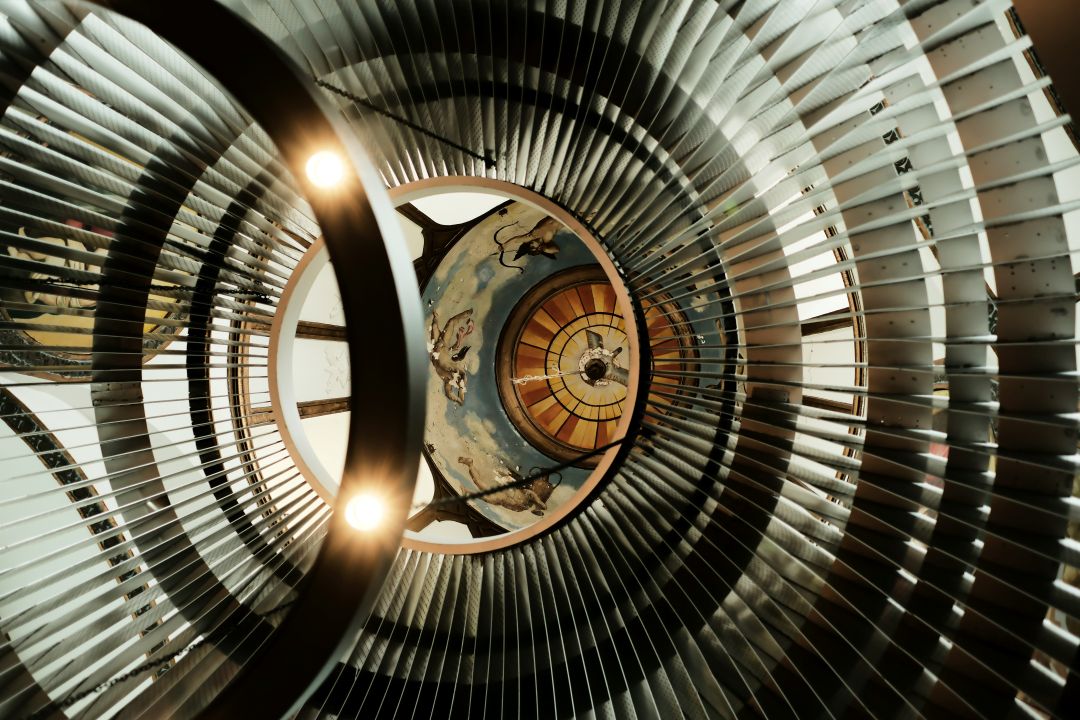
How Do Turbines Work? Fundamentals and Areas of Application
Turbines are highly advanced turbomachines that convert the kinetic or thermal energy of flowing media such as water, steam, wind, or exhaust gases into mechanical rotational energy. This mechanical energy is then used to generate electricity, drive machines, or serve other technical purposes. The basic principle is based on the targeted deflection and deceleration of the flowing medium over specially shaped blades, which creates torque.
Physical Operating Principle of Turbines
The core of every turbine is energy conversion through controlled flow guidance. When a medium strikes the turbine blades, it transfers its momentum to the rotor and generates a rotational motion of the shaft. The stator, a stationary component, directs the flow optimally before and after the rotor to minimize turbulence and maximize efficiency.
A turbine’s efficiency depends primarily on blade geometry, pressure differences, and flow velocity. Modern turbine blades are aerodynamically or hydrodynamically optimized to achieve the highest possible energy yield with minimal losses. Factors such as angle of attack, surface finish, and precise matching between stator and rotor play a central role.
Design and Main Components
Every turbine consists of three essential elements: the rotor with its runner blades, the stator with the guide vanes, and the surrounding casing. The rotor converts flow energy into rotation, while the stator directs the flow and ensures optimal inflow angles.
The casing serves several functions: it guides the medium to the blades in a controlled manner, prevents leakage, and ensures uniform pressure distribution. In steam and gas turbines, complex sealing systems are also used to minimize energy losses caused by undesirable leakage flows.
Blade geometry varies significantly depending on the application. Axial blades guide the medium parallel to the axis of rotation, while radial blades cause a deflection at a right angle. This design diversity makes it possible to optimize turbines for a wide range of applications.
Main Types and How They Work
Steam Turbines
Steam turbines use superheated water vapor as the working medium. The steam, at high pressure and temperature, expands as it flows through the turbine stages and releases its thermal energy in the process. Multistage steam turbines operate with progressively larger blade wheels because the steam volume increases significantly during expansion.
Condensation of the steam after the final turbine stage creates a vacuum that significantly increases the efficiency of the overall process. Modern steam turbines achieve efficiencies of more than 40 percent and form the core of many power plants.
Gas Turbines
Gas turbines combine compression, combustion, and expansion in a closed system. Air is first compressed, then mixed with fuel and burned. The hot combustion gases drive the turbine, which in turn drives the compressor. The remaining energy surplus is delivered as useful power.
This design reaches speeds of up to 20,000 revolutions per minute and is characterized by compact construction and rapid load changes. Gas turbines are used both in power plants and in aircraft engines.
Wind Turbines
Wind turbines convert the kinetic energy of moving air into electrical energy. Modern systems use the lift principle. The asymmetrically shaped rotor blades create different pressures on the upper and lower surfaces, producing a force perpendicular to the direction of the incoming flow.
Aerodynamic optimization of the rotor blades is crucial for efficiency. Factors such as blade pitch angle, airfoil profile, and surface finish are optimized using Computational Fluid Dynamics (CFD) to achieve maximum energy yield across different wind speeds.

Hydropower Turbines: Proven Technology for Sustainable Energy
Hydropower turbines are among the oldest and most efficient energy conversion machines. They use the potential or kinetic energy of flowing water and convert it into electrical energy with efficiencies of over 90 percent.
Pelton turbines are particularly suitable for high heads with low water flow rates. Water is directed through nozzles onto cup-shaped buckets and transfers its momentum with minimal losses. Kaplan turbines, by contrast, perform best at low heads and high flow rates. Their adjustable blades allow adaptation to fluctuating water levels.
Francis turbines represent a compromise between both extremes and cover medium heads. The spiral water inlet ensures uniform loading of all blades and maximizes efficiency across a wide operating range.
The development of modern hydropower turbines requires precise flow simulations to avoid cavitation and optimize service life. Felsaris supports manufacturers with CFD-based optimization of turbine geometries and analysis of critical operating conditions.
Germany's Wind Turbine: Using Wind Energy Efficiently
Germany has significant wind energy potential that is harnessed by modern wind turbines. The Germany's wind-turbine stand symbolically for the technological advancement of the wind energy sector and adaptation to local conditions.
Modern wind turbines in Germany use intelligent pitch control to optimize rotor blade position. This technology makes it possible to generate consistent power even under fluctuating wind conditions while minimizing the mechanical load on the turbine.
The challenges of wind energy in Germany lie in integrating fluctuating generation into the power grid and optimizing for moderate wind speeds. New turbine designs with larger rotor diameters and higher hub heights tap wind resources that were previously considered uneconomical.
Gearless generators eliminate mechanical gearboxes and reduce maintenance requirements as well as noise emissions. These direct-drive systems, however, require precise aerodynamic design to compensate for lower rotational speeds. CFD simulations play a decisive role in developing efficient rotor blade profiles for these applications.
Flow Optimization in Turbine Development
Continuous improvement of turbine designs requires detailed flow analyses. Computational Fluid Dynamics (CFD) enables engineers to understand complex flow phenomena and identify optimization potential before expensive prototypes are built.
Boundary layer analyses show how surface roughness affects efficiency. Even small deviations from the optimal surface finish can lead to measurable performance losses. Modern manufacturing processes and coating technologies make it possible to minimize these losses.
Transient simulations capture the dynamic behavior of turbines under changing operating conditions. These analyses are particularly important for wind turbines that are constantly exposed to fluctuating inflow conditions, and for gas turbines during load changes.
Machine learning and AI-based optimization methods significantly accelerate the development process. Instead of running hundreds of CFD simulations individually, surrogate models can predict the behavior of turbine geometries and automatically identify optimal designs.
Maintenance and Operational Optimization
Modern turbines are equipped with extensive sensor systems that continuously monitor operating parameters. Vibration measurements, temperature profiles, and pressure distributions provide information about the condition of the system and enable predictive maintenance.
Condition monitoring systems analyze this data and detect deviations from normal operation at an early stage. Imbalance, blade damage, or seal wear can be identified before they lead to costly failures.
Optimization of maintenance intervals is based on statistical evaluations and predictive models. These approaches reduce unplanned downtime and extend the service life of critical components.

Future Technologies and Innovations
The next generation of turbines will increasingly rely on artificial intelligence and adaptive systems. Self-learning algorithms adjust operating parameters in real time to changing conditions and continuously maximize efficiency.
Additive manufacturing enables complex internal cooling channel structures in gas turbine blades that cannot be produced using conventional methods. These internal cooling systems allow higher operating temperatures and therefore better efficiencies.
Hybrid drive systems combine different turbine types to leverage the strengths of different technologies. For example, combined-cycle power plants that pair gas turbines and steam turbines can raise overall efficiency to more than 60 percent.
Hydrogen as a fuel for gas turbines is gaining importance for carbon-free power generation. However, hydrogen combustion requires adapted combustor and turbine designs to account for the specific properties of this fuel.
Conclusion
Turbines are key technologies in modern energy supply and will continue to play a central role in the energy transition. Continuous optimization through advanced simulation methods, AI-supported development approaches, and innovative materials steadily increases their efficiency and reliability.
For companies that want to develop innovative turbine solutions or optimize existing systems, Felsaris offers comprehensive engineering services from CFD simulation and prototype development to validation. Our expertise in flow optimization and AI-enabled product development accelerates innovation processes and secures technological advantages.
Are you planning a turbine project or want to optimize existing plants? Contact Felsaris for expert advice and tailored development solutions.
Frequently Asked Questions About Turbines
What is the difference between axial and radial turbines?
Axial turbines guide the flowing medium parallel to the axis of rotation, while radial turbines cause a right-angle deflection from outside to inside or vice versa. Axial turbines are suitable for large volumetric flow rates at moderate pressure drops, while radial turbines are suited for high pressures with compact design.
What role does blade geometry play in efficiency?
Blade geometry largely determines how efficiently flow energy is converted into rotational energy. Factors such as angle of attack, profile, surface finish, and the number of blades influence flow losses, cavitation, and the optimal operating speed.
Why are multistage turbines more efficient than single-stage turbines?
Multistage turbines can reduce the pressure drop in several smaller steps, keeping flow velocities within an optimal range. This reduces losses and enables higher overall efficiencies, especially with large pressure differences.
How does surface roughness affect turbine performance?
Increased surface roughness raises friction losses in the boundary layer and can lead to premature flow separation. Even small deteriorations in surface quality can cause measurable efficiency losses, which is why regular maintenance and cleaning are important.
Which materials are used for turbine blades?
Material selection depends on the application. Hydropower turbines typically use stainless steels or bronze, wind turbines use glass fiber or carbon fiber reinforced polymers, and gas turbines use high-temperature superalloys with special coatings for protection against corrosion and wear.